AI eyes on the waste bunker: €4.3M for Jaipur Robotics
The Swiss seed round targets waste-to-energy sites: 50 million labeled images, 99 percent hazard detection — figures the company has not opened up.
In short
Jaipur Robotics has closed a €4.3 million seed round co-led by EquityPitcher Ventures and High-Tech Gründerfonds to sell computer-vision monitoring to waste-to-energy operators.
At a glance
- Round: €4.3 million seed, co-led by EquityPitcher Ventures and High-Tech Gründerfonds (HTGF).
- Company: founded in 2024, based in Manno near Lugano, Switzerland.
- Training data: more than 50 million labeled images from European waste-to-energy plants.
- Vendor metrics: over 5 million metric tons of waste per year, 99 percent hazardous-material detection.
- Market: 3,100-plus waste-to-energy plants worldwide; cement and biomass also targeted.
Jaipur Robotics, an industrial AI company founded in 2024 and based in Manno near Lugano, has raised €4.3 million in seed funding. EquityPitcher Ventures and High-Tech Gründerfonds (HTGF) co-lead the round. The pitch is narrow: point cameras at the waste bunker and convert what they see into crane and combustion decisions. The money is earmarked for additional markets and further engineering.
The bunker is the hard part
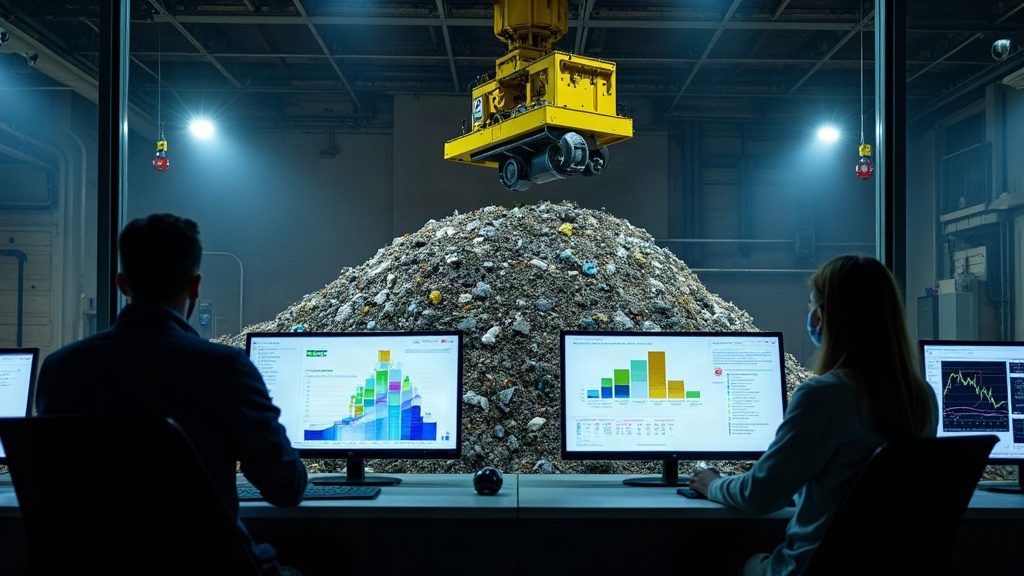
Municipal waste arrives unsorted and uneven, which makes both safety and steady combustion a matter of judgment. The system watches material entering and moving through the plant, flags hazardous items, and maps calorific value so operators can build a more predictable feed. That guidance is then meant to steer automated crane movement instead of a driver working by eye. The model was trained on more than 50 million labeled images from European waste-to-energy plants.
The numbers are the vendor's
Three figures carry the story: more than 5 million metric tons of waste run through the analysis each year, 99 percent of hazardous material is detected, and unplanned shutdowns dropped by more than 80 percent at individual sites. All three are company claims. No independent audit or third-party measurement of them has been published, so treat them as a sales sheet rather than a result.
Who would buy this
The company puts the global installed base at more than 3,100 waste-to-energy plants, many still running on manual monitoring and analog processes, with cement and biomass facilities as adjacent targets. That is a narrow, capital-heavy customer set rather than a volume software market. The report gives no cost-per-outage figure, so how the purchase pays for itself is not something this coverage establishes.
What the announcement leaves out
No founders are named, no headcount, no reference customers, and no countries where the system is already running. It is also unstated whether a deployment ships cameras and edge compute or layers software onto equipment a plant already owns. Beyond the two leads, no further investors are listed, and neither firm is quoted. Only one independent newsroom covered this round, so none of it has been cross-checked against a second report.
FAQ
Who invested in Jaipur Robotics?
EquityPitcher Ventures and High-Tech Gründerfonds (HTGF) co-lead the €4.3 million seed round. No additional investors are named in the coverage.
What does Jaipur Robotics' computer vision actually do?
Cameras track waste moving through the plant. The model is meant to flag hazardous material, improve mixing, map calorific value, and feed predictive guidance to automated crane operations.
Has the 99 percent detection rate been independently verified?
No. That rate, the 5 million metric tons handled per year, and the 80-percent-plus drop in unplanned shutdowns are all company figures, with no published third-party check.