Google Plans Two In-House AI Chips per Year
Speaking in Taipei, AI infrastructure chief Amin Vahdat said Google plans two custom chips a year instead of one generation every two years.
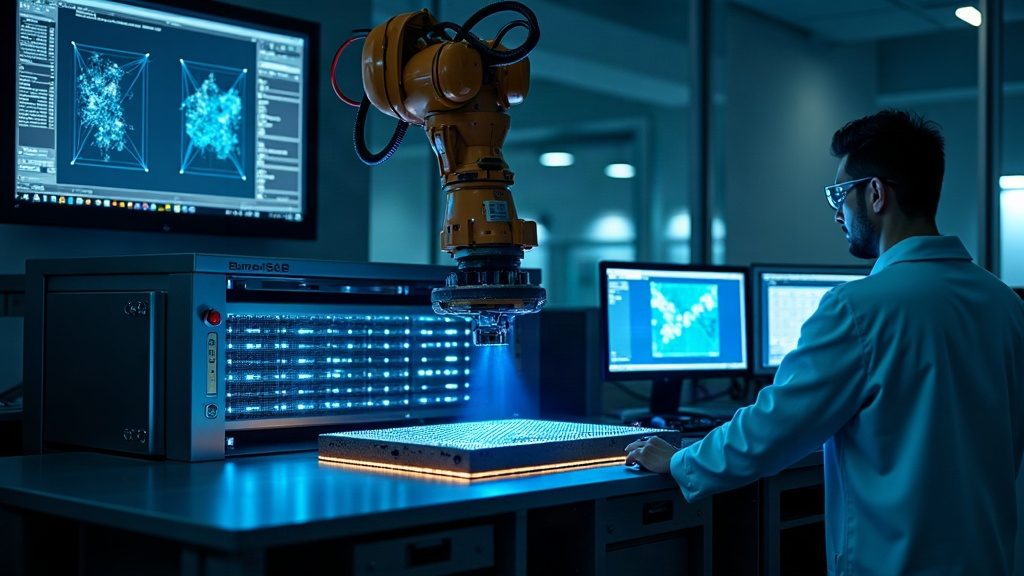
Symbolic image: a robotic arm lowers an accelerator board into a test rack at night while status lights glow along the chassis.
Google intends to put out two of its own AI chips every year rather than one new generation every two years, infrastructure chief Amin Vahdat said in Taipei.
At a glance
- Amin Vahdat is a senior vice president at Google and runs the company's AI infrastructure.
- Old cadence: one chip generation every two years. New cadence: two chips a year, possibly more later.
- Google's research and development space in Taiwan is set to grow by 60 percent.
- Reported by Nikkei Asia on September 2, 2026 from Taipei, by Cheng Ting-Fang and Lauly Li.
- Only one independent newsroom carries this story, and the report sits behind a paywall.
Google is compressing the schedule for its custom AI silicon. Instead of one new chip generation roughly every two years, the company plans to put out two chips a year, according to Amin Vahdat, the senior vice president who runs its AI infrastructure. He spoke in Taipei; Nikkei Asia reported the remarks on September 2, 2026. More than two per year is on the table further out, the report says.
Cadence, not a product launch
What changed here is timing, not a specific piece of hardware. No chip names or generation numbers appear in the portion of the report readable without a subscription.
Alongside the cadence shift comes a commitment in Taiwan: Google's research and development footprint there is to expand by 60 percent. The accessible text gives no cost, headcount or completion date for that expansion.
Why cadence matters
Designing your own accelerators means deciding for yourself when the next generation ships, rather than waiting on whatever merchant hardware the market offers and at what price. The trade is real, though: a faster cadence needs more design teams running in parallel and more committed capacity at manufacturing partners.
It also shortens the window in which each deployed generation has to pay for itself inside a data center. Whether Google actually sustains the pace is something only shipped hardware will show — an announced schedule is not evidence of one.
What we could not confirm
The report is paywalled. Only the headline, byline and opening paragraphs were available for this article.
That leaves several things unverified: any verbatim quote from Vahdat, which chip generations are affected, when the first chip on the new cadence arrives, and any investment figure. Nothing in the readable text supports a link to other companies, contract manufacturers or competing products, so we draw no such link here.
Transparency note: this story rests on a single independent newsroom. The AI IN LIFE standard requires at least two independent sources before we treat a claim as established. That bar is not met here, and we did not paper over the gap with references we have not read.
FAQ
How many custom AI chips will Google release each year?
Two a year, up from one generation every two years. The report says the company sees room for more per year later on.
What is Google expanding in Taiwan?
Its local research and development space, by 60 percent. No budget or schedule appears in the accessible part of the report.
Is this confirmed by more than one newsroom?
No. As of publication only Nikkei Asia carries it, and its report is paywalled, so parts of the story remain unverified.