Microsoft's AI watermarks can be traced back to users
Paint and Photos embed invisible server-issued IDs in locally generated AI images. A researcher shows the identifiers could be linked to accounts.
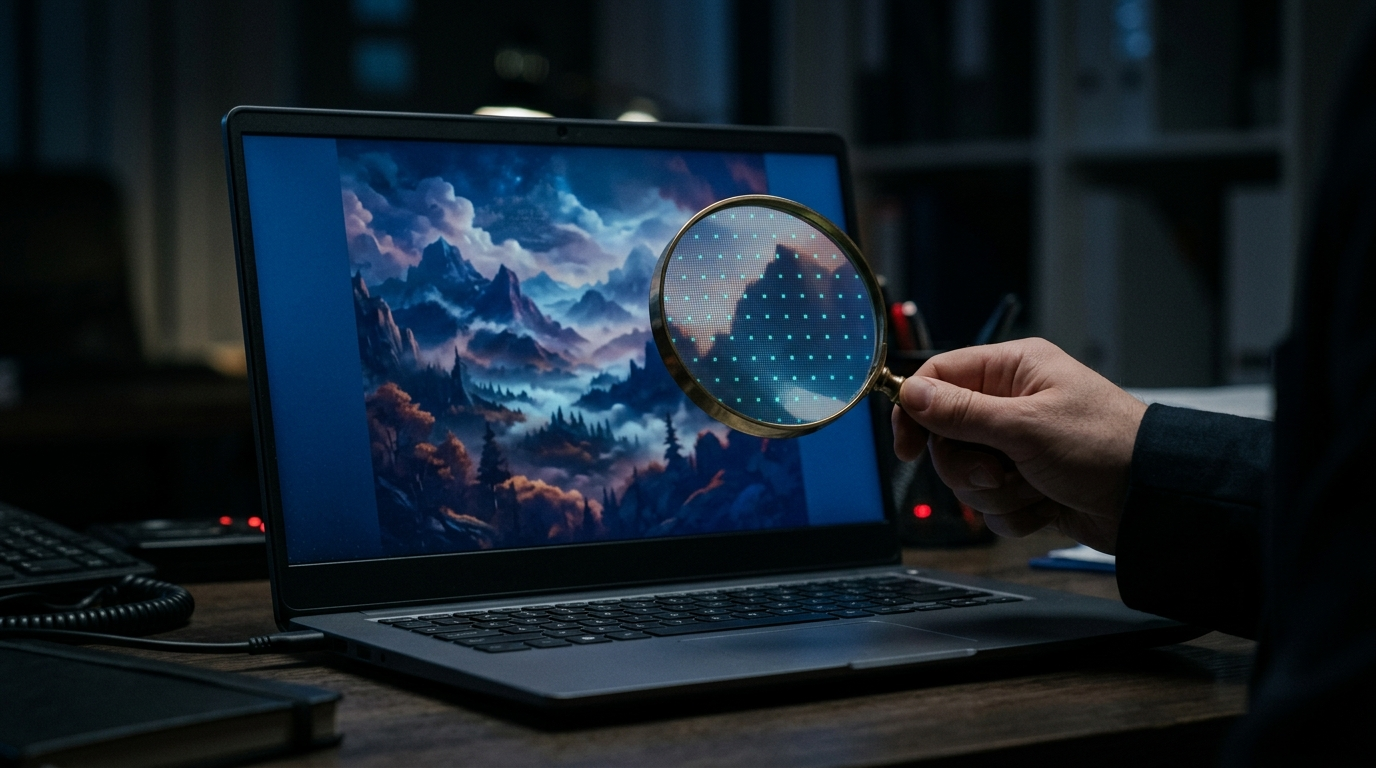
Illustration · AI-generated (AI IN LIFE)
At a glance
- Analysis by Xusheng Li (Vector 35), published August 25, 2026
- Paint and Photos embed a 16-byte GUID invisibly into the pixels of locally generated AI images
- The GUID comes from Microsoft's moderation server; follow-up requests chain earlier prompt IDs
- Pixel watermarks survive screenshots — unlike strippable C2PA metadata
- Microsoft initially left the researcher's inquiries unanswered
AI images created with Microsoft Paint and the Photos app carry invisible watermarks that could in principle be tied to individual users. That is the finding of an analysis published on August 25, 2026 by security researcher Xusheng Li of reverse-engineering firm Vector 35. The core discovery: even locally generated images receive an identifier issued by Microsoft's servers.
Technically it works like this: before generating an image, the app sends the prompt to Microsoft servers for moderation. "Your prompt is sent to Microsoft for moderation, and the returned GUID is encoded into the pixels," Li writes in his analysis. The 16-byte globally unique identifier ends up invisibly in the image — on top of the C2PA provenance data in the metadata.
The chaining is what makes it sensitive: according to the analysis, follow-up requests also transmit earlier prompt IDs, allowing series of images to be linked together. If Microsoft stores the mapping of prompt IDs to accounts, an anonymously shared image could later be traced to a user — a tracking capability The Register compares to the once-controversial invisible printer dots.
Provenance labeling of AI images is generally considered desirable and is encouraged by the EU AI Act's transparency rules; C2PA metadata, however, can be stripped, while the pixel watermark survives screenshots. Exactly that robustness turns it into a privacy issue: the marking happens without any visible notice to users. Microsoft initially did not respond to the researcher's inquiries.
For businesses, the takeaway is: anyone generating AI images with Windows' built-in tools should assume every image carries a server-issued, potentially traceable identifier — a point that belongs in internal AI policies.
FAQ
What did the researcher discover in Microsoft Paint?
That Paint and the Photos app embed a server-issued 16-byte identifier invisibly into the pixels of every locally generated AI image — in addition to the known C2PA metadata.
Can Microsoft identify individual users this way?
In principle, yes: the prompt passes through Microsoft's moderation server, which issues the identifier. If Microsoft stores the mapping to accounts, an image could later be traced to a user. Whether that happens is not proven; Microsoft initially did not comment.
How is this watermark different from C2PA metadata?
C2PA data sits in the metadata and can be removed. The GUID watermark lives in the pixels themselves and survives screenshots and format conversions.