
Taiwan indicts nine over Nvidia B300 servers bound for China
130 high-end AI servers were allegedly smuggled toward China. Among the accused: an Nvidia manager and two Supermicro employees in Taiwan.
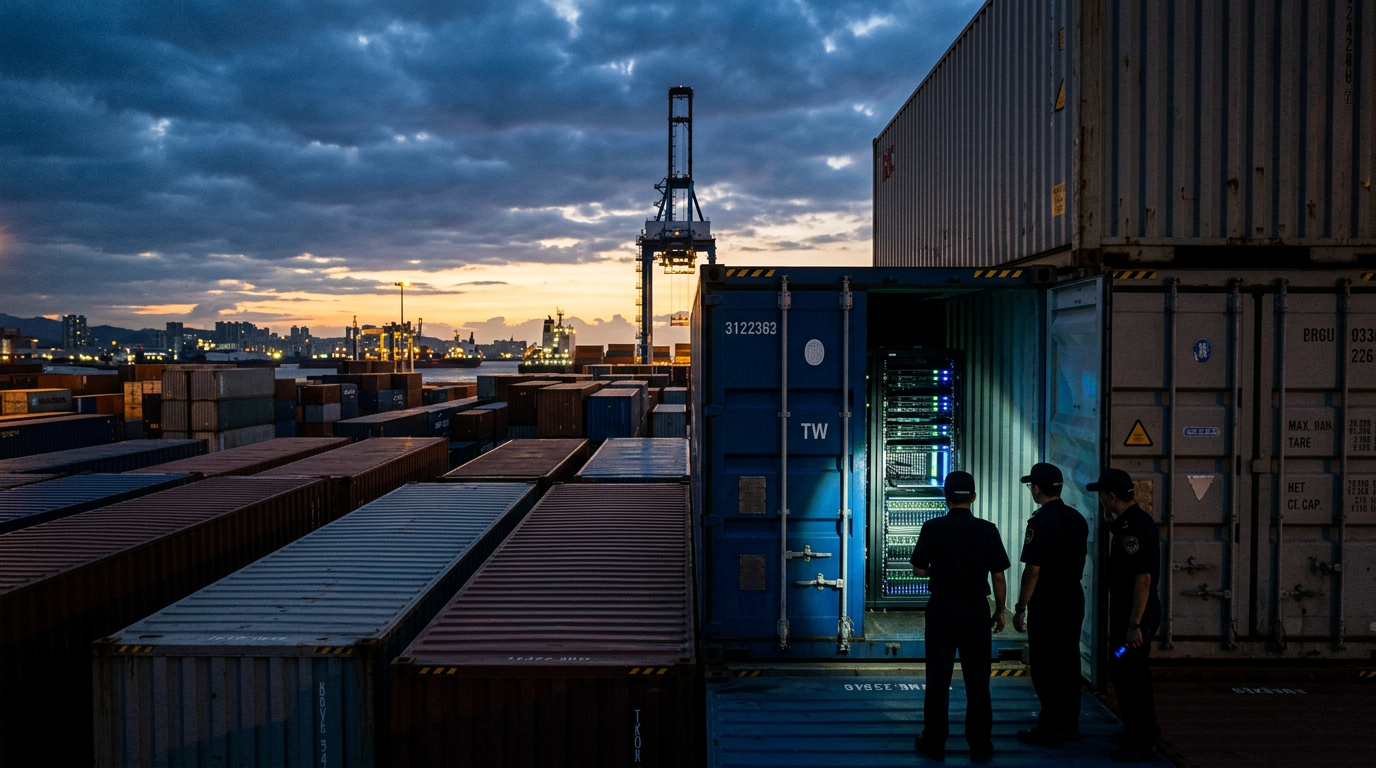
Illustration · AI-generated (AI IN LIFE)
At a glance
- Nine indicted, including an Nvidia Taiwan manager and two Supermicro employees
- 130 B300 servers ordered; 74 delivered to China, 56 stopped by customs
- Routes: directly to China and via Indonesia, Japan and Hong Kong
- About $21 million in profit from the first shipments alone
- Charges include breach of trust and document forgery; multi-year sentences possible
Prosecutors in Taiwan have indicted nine people for allegedly funneling 130 Nvidia B300 servers toward China in violation of export controls. The accused include a sales manager at Nvidia Taiwan and two employees of server maker Supermicro's Taiwan subsidiary. The indictment became public on August 25, 2026.
According to investigators, the scheme ran through trading firm Flying Tiger Tech, which obtained whitelist status via a distributor and told inspectors the servers would stay in Taiwan. In reality, 74 machines went to Chinese buyers — some directly, some via detours through Indonesia, Japan and Hong Kong. Taiwanese customs stopped another 56 servers.
Prosecutors say the defendants "colluded with one another at various levels for enormous profit, illegally exporting high-end servers, increasing corporate compliance costs, and severely damaging our nation's international image," as quoted by the Taipei Times.
The first shipments alone allegedly generated a good 21 million US dollars in profit, according to Tom's Hardware. The defendants face multi-year prison sentences; eight are charged with breach of trust and document forgery.
The case shows how much the gray market for AI accelerators has grown under US export controls — and that the supply chain itself becomes the weak point when insiders at manufacturers and distributors cooperate. For Nvidia and Supermicro, the indictment comes at an awkward time: both have stressed their strict control processes for years.
FAQ
Who was indicted in Taiwan?
Nine people, including a sales manager at Nvidia Taiwan, two employees of Supermicro Taiwan, and principals of trading firm Flying Tiger Tech plus other involved companies.
How did the servers reach China?
Through forged end-user documents: officially the servers were to remain in Taiwan, but 74 units went to Chinese customers directly or via Indonesia, Japan and Hong Kong. Customs intercepted another 56.
Why does this case matter internationally?
It demonstrates that US export controls on AI chips are being systematically circumvented via third countries — and that insiders at manufacturers and distributors can play a key role.