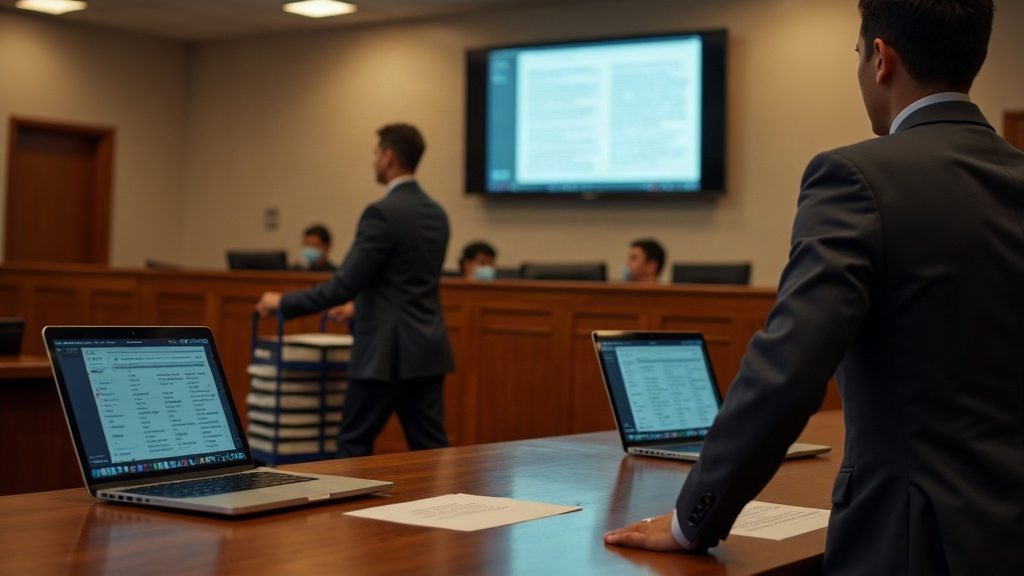
US Justice Department backs OpenAI in NYT copyright case
The Justice Department told a Manhattan court that training a model on protected text is fair use, a position that cuts against the newspaper.
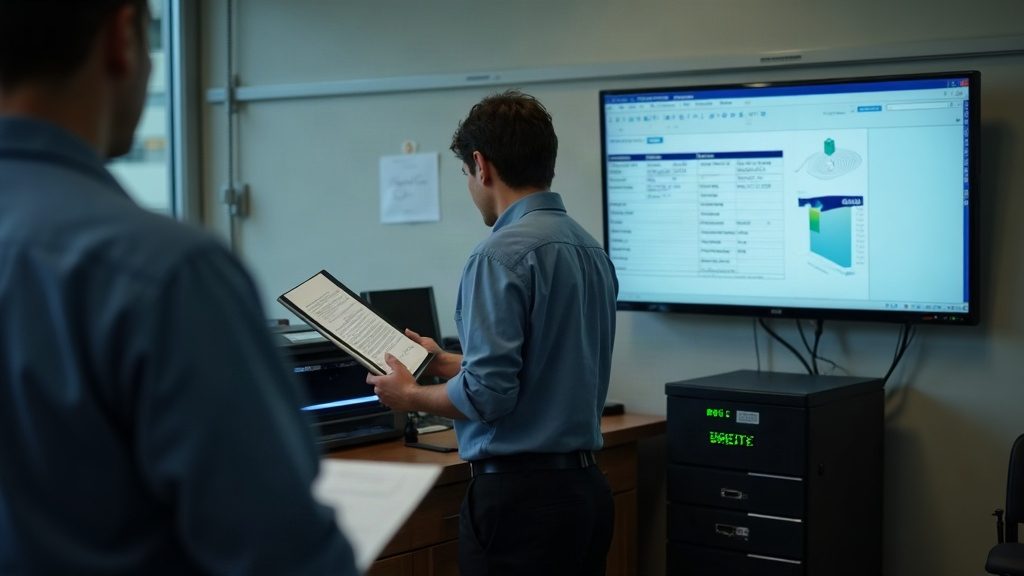
Symbolic image: a bound legal brief is fed into a document scanner in a courthouse filing room while green status lights blink on a server cart nearby.
The US Department of Justice has weighed in on The New York Times' copyright suit against OpenAI, telling the court that training a large language model on protected text qualifies as fair use.
At a glance
- The New York Times sued OpenAI in December 2023 and is seeking damages running into the billions.
- Justice Department: copying for training and what a model outputs are two separate legal questions.
- The filing argues model outputs usually lack substantial similarity to the source articles.
- The consolidated case sits in a Manhattan federal court and is treated as a bellwether.
- OpenAI was ordered to hand over 20 million ChatGPT conversations in the case.
The US Department of Justice has weighed in on The New York Times' copyright suit against OpenAI, telling the court that training a large language model on protected text qualifies as fair use.
The argument
The government's case rests on splitting the question in two. Copying articles to assemble a training set is one act; what the finished model writes for a user is another. On the second point the filing is blunt — outputs often, if not always, lack the substantial similarity an infringement claim needs.
There is a value argument layered on top. Language models carry creative and social worth, and sweeping liability would chill the very expression copyright exists to protect. The department stops short of asking for a blanket rule, saying fair use turns on the specific facts of each use.
What is at stake
The Times sued in December 2023, alleging OpenAI built its systems on the paper's journalism without permission, and is asking for damages running into the billions. The consolidated case is before a federal court in Manhattan and is widely treated as the bellwether for AI training and copyright.
The litigation has already produced one striking order: the court told OpenAI to turn over 20 million ChatGPT conversations.
Limits of the move
A filing from the executive branch decides nothing on its own. It does mark where federal policy sits while other rights-holder suits wait on this outcome. Available reporting does not settle whether Washington is defending OpenAI's specific conduct or only the broader legal theory.
The intervention lands after the administration removed Shira Perlmutter from her post leading the Copyright Office, a dismissal Representative Joe Morelle criticized publicly.
FAQ
What did the Justice Department say in the New York Times v. OpenAI case?
It argued that training language models on copyrighted material is fair use, drawing a line between the act of copying for training and what the model later produces.
Does this make AI training legal in the US?
No. It is an executive-branch legal position, not a ruling, and the department itself says fair use has to be assessed case by case.
What is The New York Times suing OpenAI for?
The paper alleges OpenAI trained on its articles without permission, a suit filed in December 2023 seeking damages in the billions; OpenAI was ordered to produce 20 million ChatGPT conversations.