Bridgestone mining tires ride the AI copper boom
Japan's tiremaker is running its Kitakyushu plant close to full tilt as data center copper demand drives orders for its largest tires.
In short
Bridgestone is running its Kitakyushu plant for ultralarge mining and construction tires at close to full capacity because the AI boom is pushing miners to dig more copper for data centers.
At a glance
- Kitakyushu plant: Bridgestone builds ultralarge mining and construction tires there at close to full capacity.
- The driver, per Nikkei Asia, is the AI boom: data centers consume copper, and copper mining needs heavy machines.
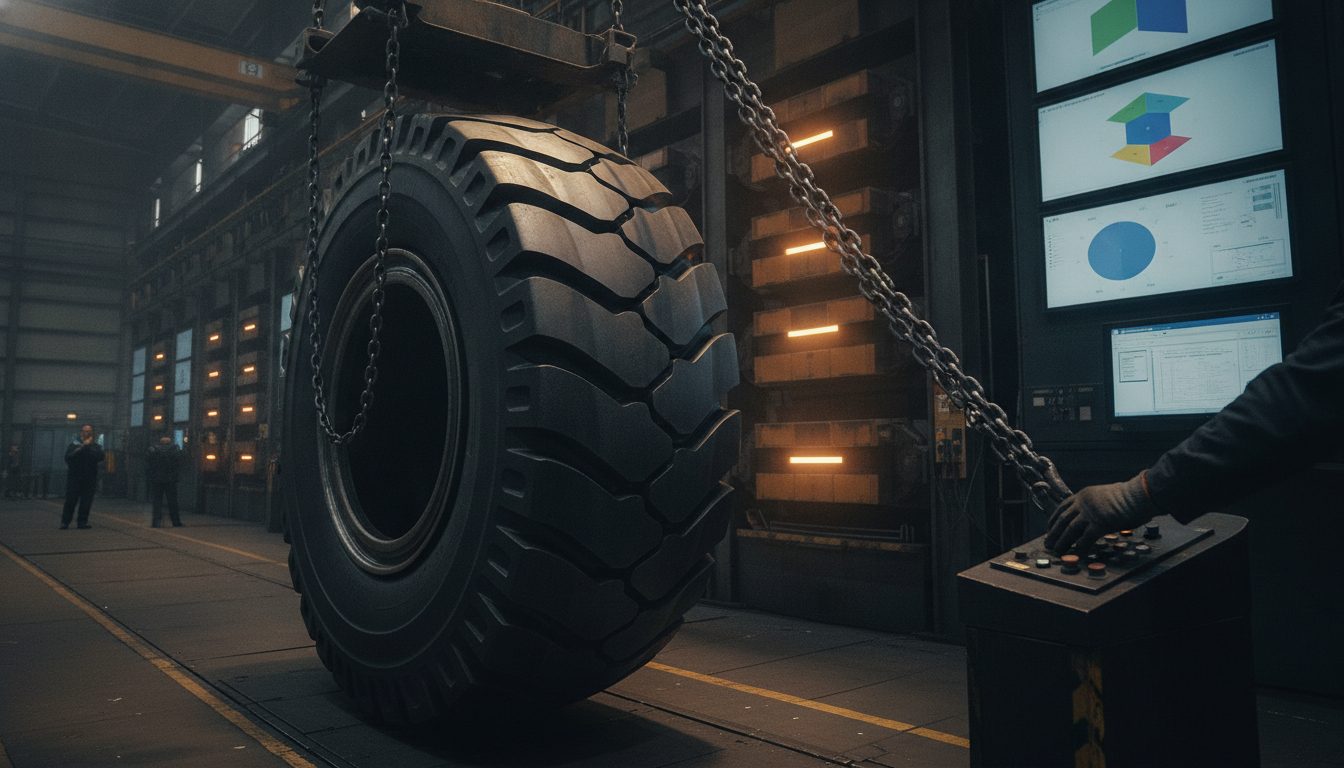
- The tires stand more than twice as tall as an average person, according to the report.
- Bridgestone is steering output toward high-margin segments rather than spreading capacity across all tire classes.
- The November 8, 2026 report gives no investment figure, unit volume or market share.
Bridgestone is pushing its Kitakyushu plant for ultralarge mining and construction tires close to full capacity. Nikkei Asia points to the AI boom as the reason, though the link runs through raw material rather than rubber: data centers absorb large volumes of copper, and the machines that haul copper ore ride on tires standing more than twice as tall as an average person.
From server hall to curing press
The chain is short but crosses industries. AI infrastructure needs busbars, cabling and cooling, all of which means copper. When copper demand climbs, mine operators work their fleets harder, and consumables such as ultralarge tires become the constraint. Bridgestone sits at that end of the chain, far from the racks.
Why these tires in particular
Mining tires are a margin business rather than a volume one: low unit counts, high prices, long supply relationships. The company is concentrating production on high-margin products instead of spreading capacity evenly, the report says. For a maker whose passenger-car tire business lives under constant price pressure, that is the more profitable half of the portfolio.
What the report does not establish
This is where the verified material stops. The article names no investment figure, no unit volumes, no utilization percentage, no market share and no competitors. Nor does it say how long the current run rate holds — that depends on mine operators' capital plans, not on the plant. We leave those numbers out rather than estimate them.
The wider read
The case shows how far the AI capital wave now reaches into businesses with no software in them. A tire plant in northern Kyushu is three steps removed from a training run and still feels it. A note on sourcing: the Nikkei Asia piece is only partly open to readers, so what is confirmed here is the core claim, the plant, the product category and the demand driver.
FAQ
Why is AI driving demand for mining tires?
Indirectly. AI data centers need large amounts of copper, which makes mining fleets run harder, and those haul trucks consume ultralarge tires as a wear part.
Where does Bridgestone make these ultralarge tires?
At its Kitakyushu plant in Japan, which according to Nikkei Asia is currently building mining and construction tires at close to full capacity.
How big are mining tires?
More than twice as tall as an average person, per the report. Exact dimensions, weights and prices are not given in the source.