XPENG IRON humanoid robot heads for 2027 mass production
The Chinese carmaker has put a month on it: hardware mass production starts in January 2027, and IRON's first job will be on XPENG's own shop floors.
In short
XPENG introduced its IRON humanoid robot at its AI Day in Guangzhou on November 25, 2026 and said hardware mass production will begin in January 2027.
At a glance
- Hardware mass production from January 2027; store-assistant training in XPENG retail stores in the first quarter of 2027.
- 76 degrees of freedom, 21 of them in the hand, plus more than 1,500 tactile sensing points.
- Three in-house Turing AI chips deliver 2,250 TOPS of onboard computing power, XPENG says.
- The automated line is designed to complete one IRON every 2.5 minutes at full capacity.
- CnEVPost reports IRON stands 170 cm tall and weighs 62 kg.
XPENG introduced its IRON humanoid robot at AI Day 2026 in Guangzhou on November 25, 2026. Hardware mass production is scheduled to begin in January 2027. For a company still best known for electric cars, that is a specific month rather than a statement of intent.
What is inside IRON
The latest generation has 76 degrees of freedom, including a hand with 21 of them, according to the press release. More than 1,500 tactile sensing points tell the robot when it makes contact and how hard it is gripping. Its IRON OS runs on three proprietary Turing AI chips that together deliver 2,250 TOPS of effective computing power.
Trade outlet CnEVPost adds the dimensions the release leaves out: IRON stands 170 cm tall and weighs 62 kg. A solid-state battery pack with an energy density above 300 Wh/kg is said to give 1.5 hours of work on a 20-minute charge. On stage, the outlet reports, the robot walked to the lectern on its own and then returned to its charging spot.
A factory and a data pipeline borrowed from carmaking
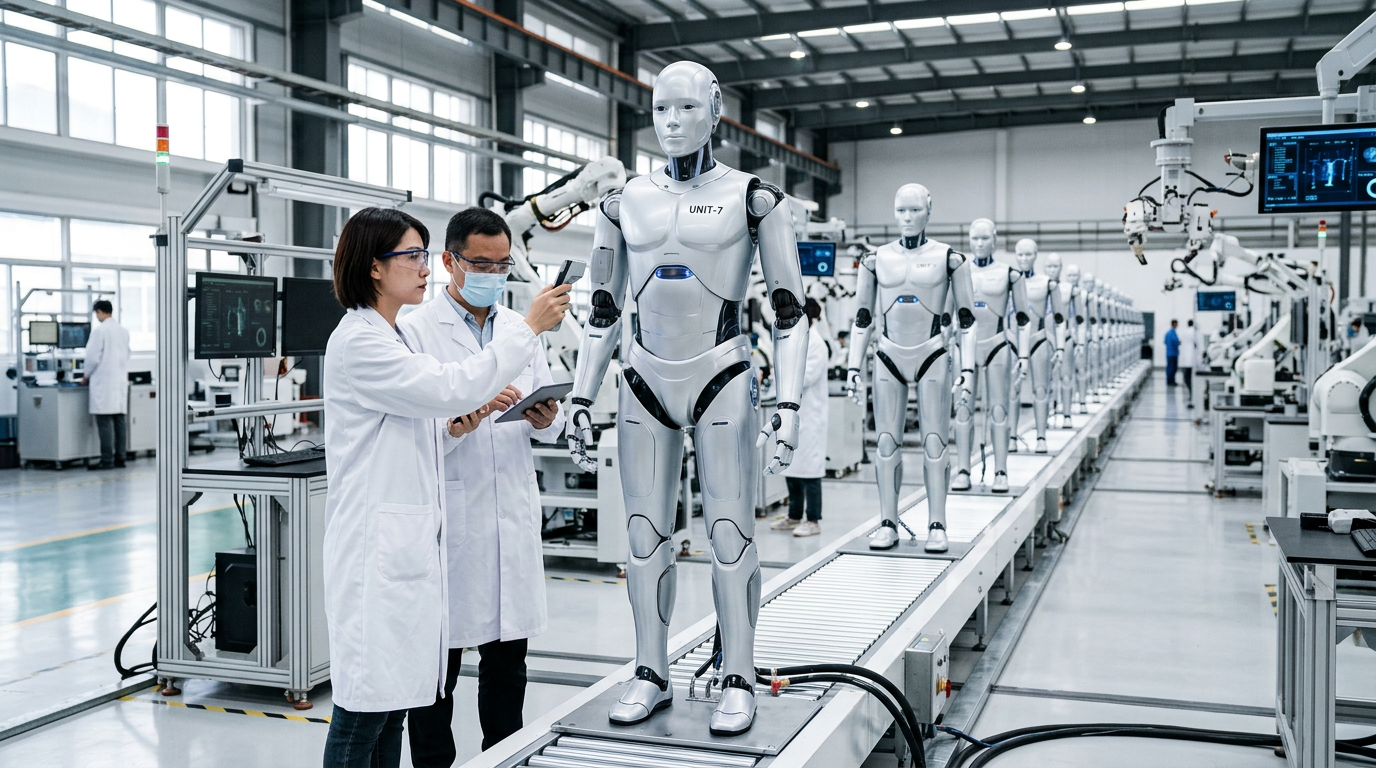
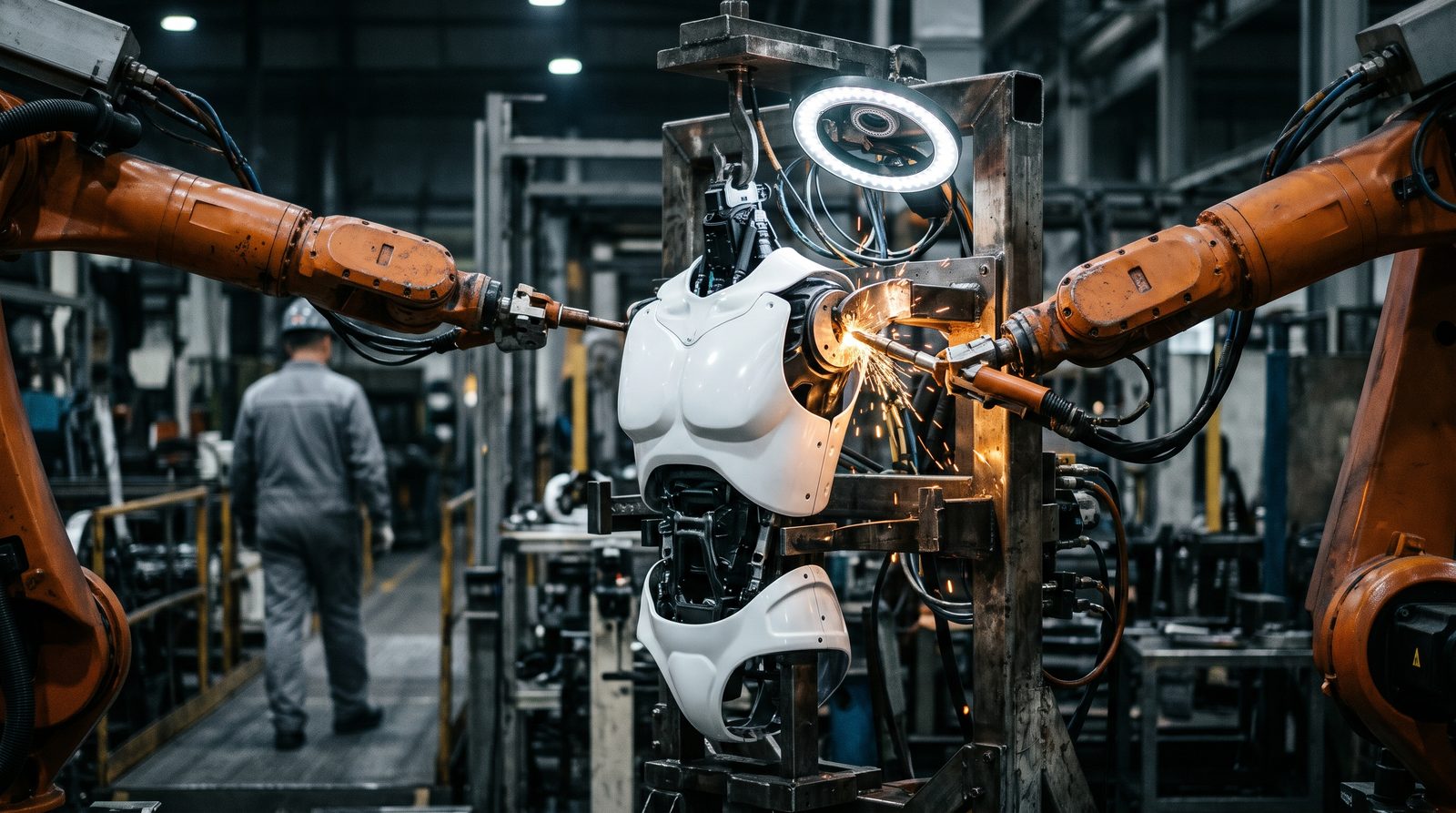
XPENG is carrying its manufacturing playbook over to the robot. A dedicated automated line uses more than 600 AI-powered inspection checkpoints and over 1,000 vehicle-grade tests. At full capacity it is designed to complete one IRON every 2.5 minutes. That is the line's design rate, not reported output.
Training happens in a purpose-built Robot Data Factory covering 50,000 square meters. The company says it spans more than 250 scenarios and 15 job categories.
First posting: the company's own stores
In the first quarter of 2027, IRON starts training as a store assistant in XPENG retail outlets, greeting customers, explaining products and handling simple service tasks. The official public release follows in the second quarter of 2027, CnEVPost reports. Before that, the robot is due to host the company's press conference at the Guangzhou auto show on November 27.
The business model has three parts: selling the hardware, charging software subscriptions, and running an open platform where developers and partners build their own skills for the robot.
What is still missing
Neither the press release nor CnEVPost gives a price. Planned unit volumes for 2027 and the names of outside customers are absent from both texts as well. The performance figures come from the manufacturer; independent tests under continuous operation have not been published.
FAQ
When will the XPENG IRON robot be released?
Hardware mass production is scheduled to start in January 2027. CnEVPost reports the official public release is planned for the second quarter of 2027.
How much does the XPENG IRON humanoid robot cost?
XPENG's press release does not state a price, and CnEVPost does not report one either. The plan combines hardware sales with software subscriptions.
What can the XPENG IRON do?
It has 76 degrees of freedom and more than 1,500 tactile sensing points, and is built to plan tasks, navigate and recharge on its own. Its first role is store assistant.