XPeng carves out robotics: $900 million for IRON humanoid push
The new unit Dogotix is valued at over $6.3 billion. Tencent and Alibaba are investing, and IRON mass production is set to start by the end of 2026.
In short
Chinese EV maker XPeng is spinning its humanoid robot business into a separate company — and raising more than 900 million dollars in its first external round.
At a glance
- Funding: over $900 million at a post-money valuation above $6.3 billion (pre-money: $5 billion)
- Investors: IDG Capital (lead), Gaorong Ventures, Tencent and Alibaba as strategics; He Xiaopeng and Gu personally invest $100 million
- New unit Dogotix: XPeng initially keeps about 82 percent; assets and personnel transfer within 18 months
- IRON: 76 degrees of freedom (21 per hand), three Turing chips with 2,250 TOPS
- Timeline: mass production from end of 2026, target of 1,000+ units per month, deliveries in 2027; seven-year IPO deadline with repurchase clause
Chinese EV maker XPeng is spinning its humanoid robot business into a separate company — and raising more than 900 million dollars in its first external round. The new unit, named Dogotix, is valued at over 6.3 billion dollars post-money. IDG Capital leads the round, joined by Gaorong Ventures and, as strategic investors, Tencent and Alibaba.
The structure in detail: roughly 600 million dollars comes from external investors, 200 million from an XPeng subsidiary, and another 100 million personally from CEO He Xiaopeng and co-founder Gu. Warrants could add up to 500 million dollars more. XPeng initially retains about 82 percent of Dogotix and continues to consolidate the unit; assets, IP and personnel are to be transferred within 18 months.
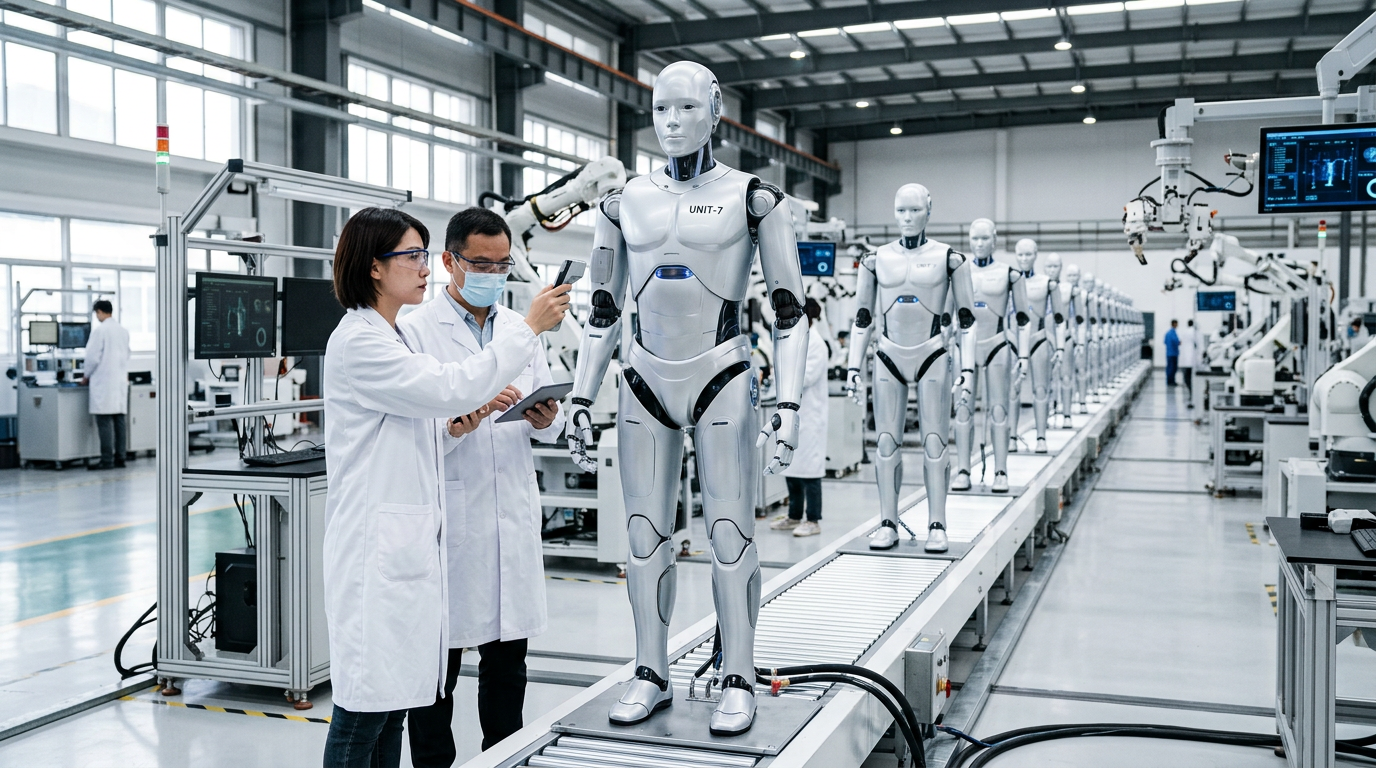
At the centre is the IRON humanoid: 76 degrees of freedom across the body, 21 per hand, and three in-house Turing AI chips delivering a combined 2,250 TOPS of compute. "IRON brings together a highly human-like design, advanced AI intelligence, built to the highest standards of safety and quality," He Xiaopeng said in the announcement.
The timeline is aggressive: mass production from the end of 2026 with a target of over 1,000 units per month, initial deployment in XPeng stores and on company campuses, and an official launch with deliveries in China and overseas in 2027. Investors have protection built in — if there is no IPO within seven years, repurchase obligations kick in.
XPeng joins a wave of Chinese robotics financings: just this weekend, humanoids at Beijing's Robot Games ran faster than Usain Bolt's world record. The carve-out shows that China's carmakers now treat their robotics arms as standalone billion-dollar bets — with their own balance sheet, their own capital and their own path to the stock market.
FAQ
What is Dogotix?
XPeng's newly carved-out robotics company. XPeng remains majority owner at about 82 percent, with external investors such as IDG, Tencent and Alibaba on board for the first time.
When is the IRON robot coming?
Mass production is set to begin at the end of 2026, initially for XPeng stores and campuses. The official launch with deliveries in China and overseas is planned for 2027.
Why are carmakers spinning off robotics?
Standalone units can raise their own capital, make valuations visible and later list separately — without weighing on the parent company's balance sheet.