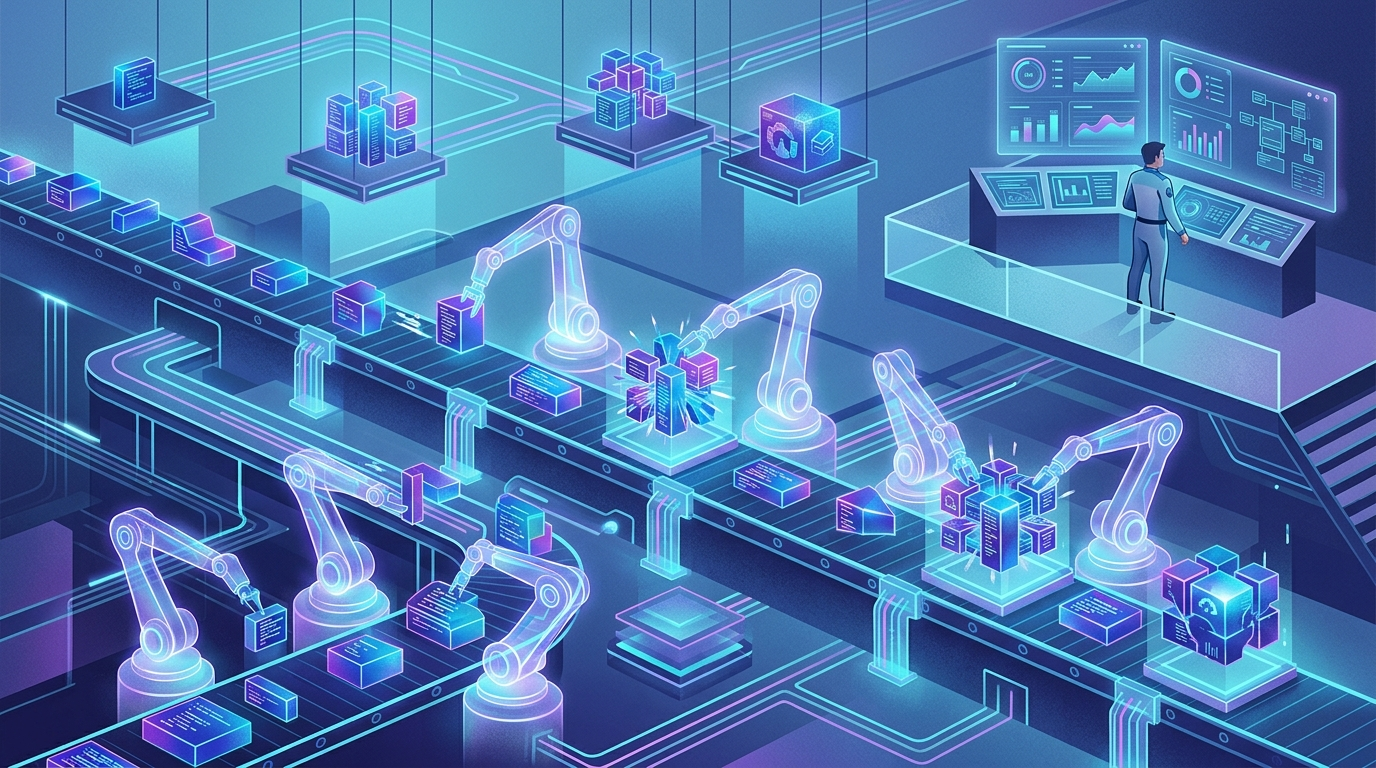
Google Play Opens Up to Private Vibe-Coded Apps
Apps generated in Google AI Studio can now be installed straight from Play on your own phone, with no public listing and no store search presence.
In short
Google Play now delivers private, AI-built apps straight to their creator's own Android device, starting in the United States and limited to users 18 and over.
At a glance
- Private apps are built in Google AI Studio and stay out of Play search results and public listings.
- Delivery runs through Play with an ordinary Google account — no sideloading, no separate store.
- Launch is United States only, with an 18-and-over requirement.
- Sharing with trusted friends is promised for the coming months; going public requires a safety review first.
Google Play now hands private, AI-built apps straight to the person who made them. The building happens in Google AI Studio; the delivery happens through Play, signed in with an ordinary Google account, with no public listing and no store search presence. At launch the feature covers the United States only and users 18 and over.
The change is distribution, not creation
Prompting an app into existence was already possible. Getting it onto a handset was the friction. Play now carries that last step itself, so a one-person app no longer has to pose as a product to reach a phone.
Existing Play policies still apply. According to TechCrunch, a safety review only enters the picture when someone wants to push a private app out publicly.
Sharing is promised, not shipped
Google says sharing a private app with trusted friends arrives in the coming months. No date came with it, so it belongs on the roadmap rather than the calendar.
What we could not confirm
Whether private distribution needs a developer account or carries a fee is not stated in the material available to us. Two of the three reports in our source set — Ars Technica and The Verge — were not technically retrievable here, so this article rests on TechCrunch alone. Caps on devices per account, or on how far a shared app may travel, are likewise unspecified.
The wider Play overhaul
The private-app move travels with a batch of other Play changes. Google points to a recommendation surface called Game Finder, Community Posts for gaming, 48-hour play challenges branded Sprints, and an assistant called Ask Play that compares apps. A separate setting lets users share an age range instead of an exact birth date.
Sam Bright, VP and GM for Google Play and Developer Ecosystem, framed the store as having outgrown its download-catalog role: “Play has evolved to become so much more than that”.
Why it matters
A private app answers to one user and no market. That strips away the review gauntlet and the growth math at once. It also routes software nobody else will ever see through a single company's delivery pipeline.
FAQ
How do private vibe-coded apps work in Google Play?
You generate the app with AI in Google AI Studio, then Play installs it on your own device under your Google account. It never appears in search or public listings.
Is Google Play's private app feature available outside the US?
Not at launch. The rollout starts in the United States and requires users to be 18 or older; Google gave no further countries in the information available to us.
Can I publish a private vibe-coded app to everyone later?
Yes. Google requires a safety review for that step, while purely private use does not go through one, per TechCrunch.