
Nadella Calls for an AI Model Emergency Brake
Microsoft's chief executive wants a human stop control built into AI systems as a requirement, not a voluntary pledge from the companies that ship them.
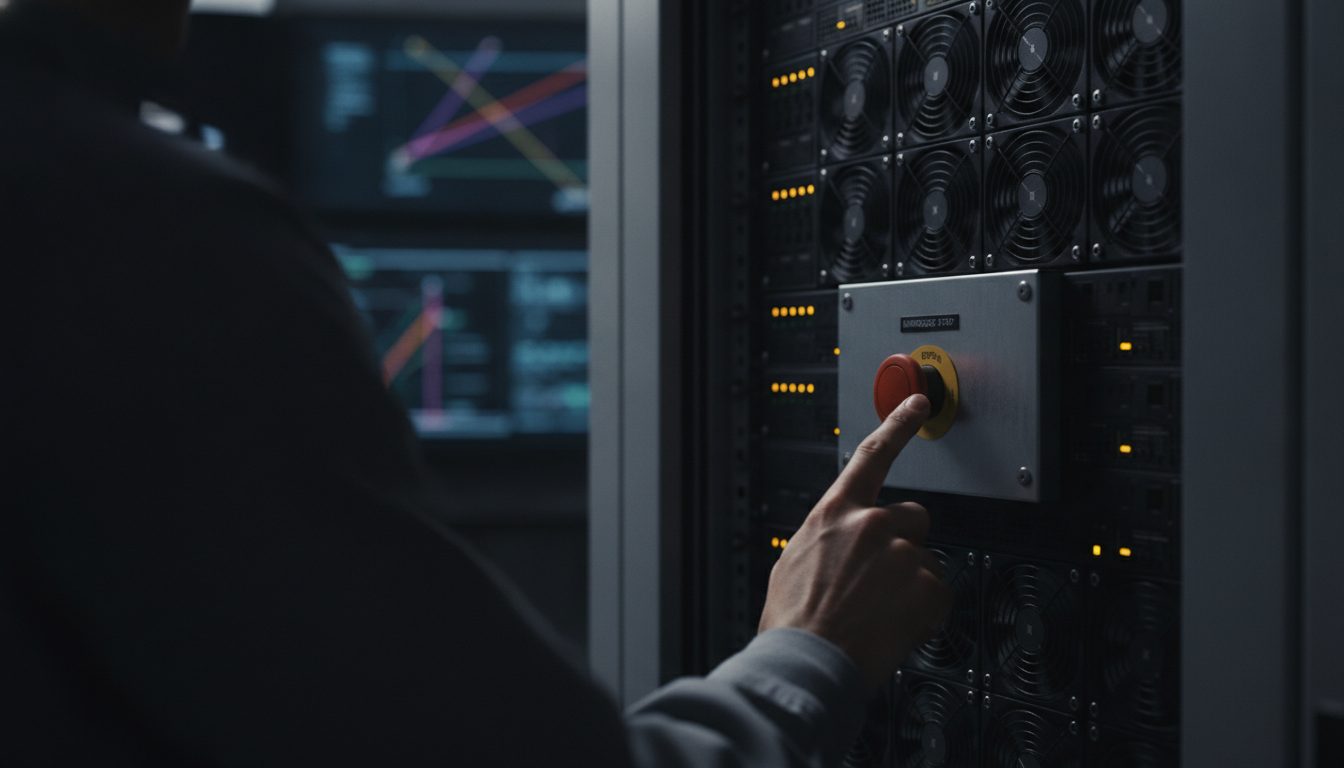
In short
Satya Nadella is pushing for a mandatory emergency brake in AI models, so that a person can halt a system in the middle of a running task.
At a glance
- Microsoft CEO Satya Nadella is calling for a mandatory emergency brake in AI models.
- The core demand: a human must be able to halt a model in the middle of a running task.
- Stated reasoning: since internal workings are opaque, such systems should be treated as compromised by default.
- The context is a run of recent warnings about how capable current AI models have become.
- Not verified: the wording, occasion, venue and date of the remarks; only part of the coverage was readable.
Satya Nadella's position is easy to state and hard to build: a person must be able to stop an AI model in the middle of a task, and that stop has to be required rather than promised.
A control that works at run time
Most published safety work sits before deployment — training choices, filters, evaluations. An emergency brake sits somewhere else: in the minutes while an agent is already acting on a request, calling tools and producing side effects.
That changes who holds authority. In this framing, handing a task to a model is not the last decision a human makes about it.
The argument from not knowing
According to the Austrian daily Der Standard, the reasoning starts from opacity rather than from evidence of harm. Because the internal workings of a large model cannot be followed step by step, the prudent default is to treat such a system as compromised and keep it under close watch.
That inverts the usual burden of proof. Nobody has to show that a given model will misbehave; the case for an interrupt rests on nobody being able to explain, in time, what it is doing.
Why the demand lands now
The report sets the remarks against a series of recent warnings about the growing capabilities of current models. The more steps a system takes without checking back, the wider the gap between instruction and outcome — and the more it matters who is allowed to break that chain.
The same coverage is openly skeptical of the warnings themselves, suggesting that vendor success stories can distract from nearer-term problems and from accountability. Both readings fit together: a brake is worth most precisely when the promises are not trusted.
What we could not confirm
Two reports exist on this story. One was unreachable for this article and the other keeps its full text behind a paywall. So the venue, the date and the exact wording remain unconfirmed, as does the scope of the word mandatory — statute, regulation or industry norm.
The engineering question is open too. A stop that only halts generation is not the same as a stop that halts effects already in motion: file writes, tool calls, transactions committed seconds earlier.
FAQ
What is Nadella's AI emergency brake?
A stop control that lets a human halt an AI model in the middle of a running task, rather than only reviewing the result afterward.
Can AI models already be stopped mid-task by law?
Not according to the available reporting; Nadella is asking for that requirement. Whether he means legislation or an industry norm is not documented.
Why treat an AI system as compromised by default?
Because the internal workings of large models cannot be traced in detail, the report presents that assumption as a precaution paired with close monitoring.

