NVIDIA Opens Vera Rubin Rack Design to OCP
At the OCP Global Summit, NVIDIA released its Vera Rubin rack and compute tray designs through MGX 1.2, including a 5,000A busbar and 250kW racks.
In short
At the OCP Global Summit on October 12, 2026, NVIDIA released the rack and compute tray designs of its Vera Rubin platform through the open MGX architecture so third-party vendors can build compatible AI racks of up to 250kW.
At a glance
- MGX 1.2 adds rack-scale blind-mate liquid cooling, a liquid-cooled 5,000A busbar and support for racks up to 250kW.
- A new Vera CPU rack spec extends MGX to tool calling, orchestration and sandboxed execution.
- Open Data Center Specification v0.7 is co-authored by NVIDIA with AMD, Google and Meta.
- Grid Resilience Specification: restore to near-full load in less than two seconds after a grid disturbance.
- Meta adopts Spectrum-6 at 102.4Tb/s; multiplane technology is meant to scale beyond 100,000 GPUs.
At the OCP Global Summit on October 12, 2026, at the McEnery Convention Center in San Jose, NVIDIA handed the rack and compute tray designs of its Vera Rubin platform to the Open Compute Project through the open MGX architecture. The pitch to the industry is blunt: equipment makers, colocation providers and data center operators can start designing, fabricating and delivering now rather than waiting for proprietary specifications. Everything below comes from NVIDIA's own announcement; no second independent newsroom had covered it when this article was published.
What is actually on the table
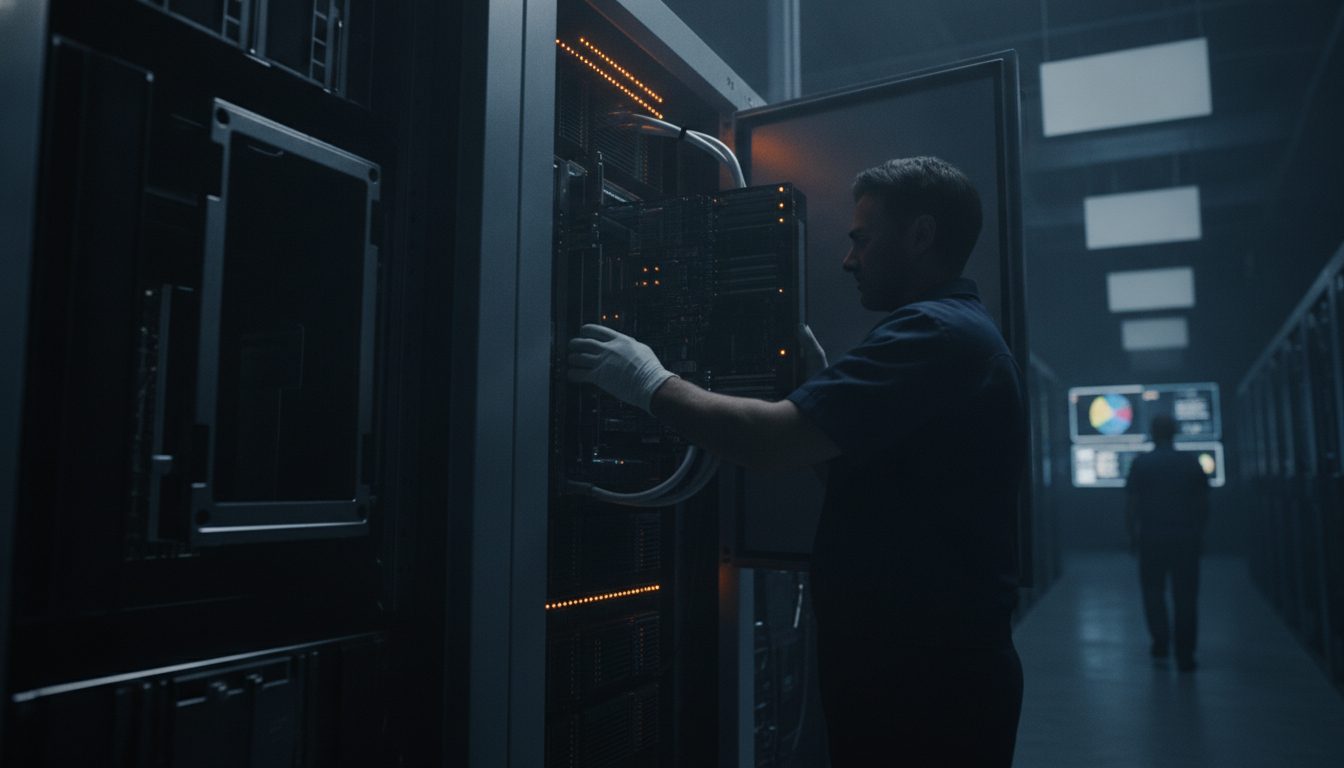
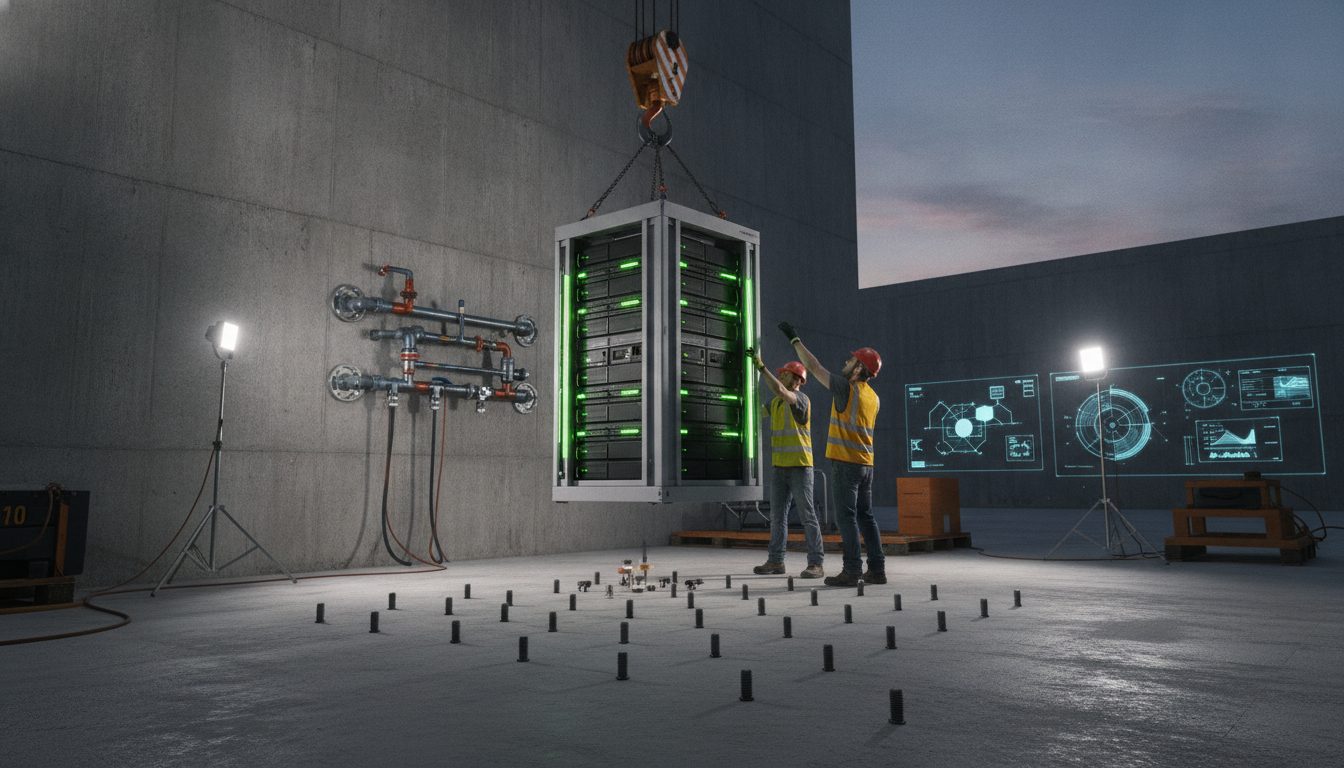
The centerpiece is the MGX 1.2 specification. NVIDIA says it adds rack-scale blind-mate liquid cooling, a liquid-cooled 5,000A busbar and standardized power and cooling interfaces, and that it supports rack deployments up to 250kW. The claimed payoff is shorter assembly, test and service times.
A separate Vera CPU rack specification pushes MGX past accelerated computing into tool calling, orchestration and sandboxed execution — the plumbing agentic workloads depend on. Vera Rubin NVL72 remains the rack for large-scale training and inference.
Two specs signed alongside rivals
Open Data Center Specification v0.7 is co-authored with AMD, Google and Meta, and defines one blueprint for AI factory facilities spanning power architecture, cooling and physical layout. Four companies that compete head-on putting their names on a single facility blueprint is the part worth noting.
The OCP Grid Resilience Specification, written with Google, Meta and Microsoft, sets out how large AI sites should behave when the utility grid wobbles: stay connected, respond automatically and restore to near-full load in less than two seconds. That reads less like a product feature than a precondition for utilities approving gigawatt-scale interconnections.
Networking: Meta, Cisco, Google
Meta is adopting NVIDIA Spectrum-6 Ethernet switches at 102.4Tb/s, which NVIDIA puts at twice the switching capacity and twice the per-lane bandwidth of Spectrum-4, with multiplane technology scaling beyond 100,000 GPUs. Omar Baldonado of Meta frames the joint work as what makes multiplane fabrics “operationally scalable,” and points to Meta's own Spectrum-based switch, N-IceCube, inside its liquid-cooled Icepack network rack.
With Cisco, NVIDIA is pushing the Ultra-Dense Small Form Factor Pluggable (USFP) standard, claimed at 400Gb/s per lane and four times the bandwidth density, with TE Connectivity and Amphenol working on cages, connectors and modules. Google plans to support Falcon Transport on future ConnectX-10 SuperNICs and BlueField DPUs.
Power: 800 VDC moves closer to the compute
Visionbay showed K-1, an AI factory platform built around an 800 VDC architecture using NVIDIA's 800 VDC reference architecture plus Vertiv power and thermal technology. The scheme centralizes AC-to-DC conversion in cluster-level power centers and distributes 800 VDC nearer the compute. As rack power density climbs, losses in the last stretch of copper stop being a rounding error.
What is not established
NVIDIA gives no count of partners actually shipping MGX systems, and no availability dates or prices. Ian Buck, the company's vice president of hyperscale and high-performance computing, spoke at the summit, but the announcement carries no direct quote from him. The two-second restore figure is a specification target, not a measured field result.
FAQ
What did NVIDIA contribute to OCP at the 2026 Global Summit?
The Vera Rubin rack and compute tray designs via the open MGX architecture, plus MGX 1.2, a Vera CPU rack specification, Open Data Center Specification v0.7 and the OCP Grid Resilience Specification.
How much power does an MGX 1.2 rack support?
NVIDIA says the specification covers rack deployments up to 250kW, fed by a liquid-cooled 5,000A busbar.
What does the OCP Grid Resilience Specification require?
Large AI installations should stay connected during grid disturbances, respond automatically and restore to near-full load in less than two seconds. NVIDIA developed it with Google, Meta and Microsoft.