Aleph Alpha releases open-weights model Kolibri
The mixture-of-experts system carries 78 billion parameters with about 3 billion active per token, and the weights ship under Apache 2.0.
In short
Aleph Alpha has published Kolibri, a German-English mixture-of-experts model with 78 billion parameters, released under Apache 2.0 and trained on 768 B200 GPUs in Germany and Finland.
At a glance
- 78 billion parameters in total, roughly 3 billion of them active per token (mixture of experts).
- 21.3 percent of the training data is German, prepared through an in-house data pipeline.
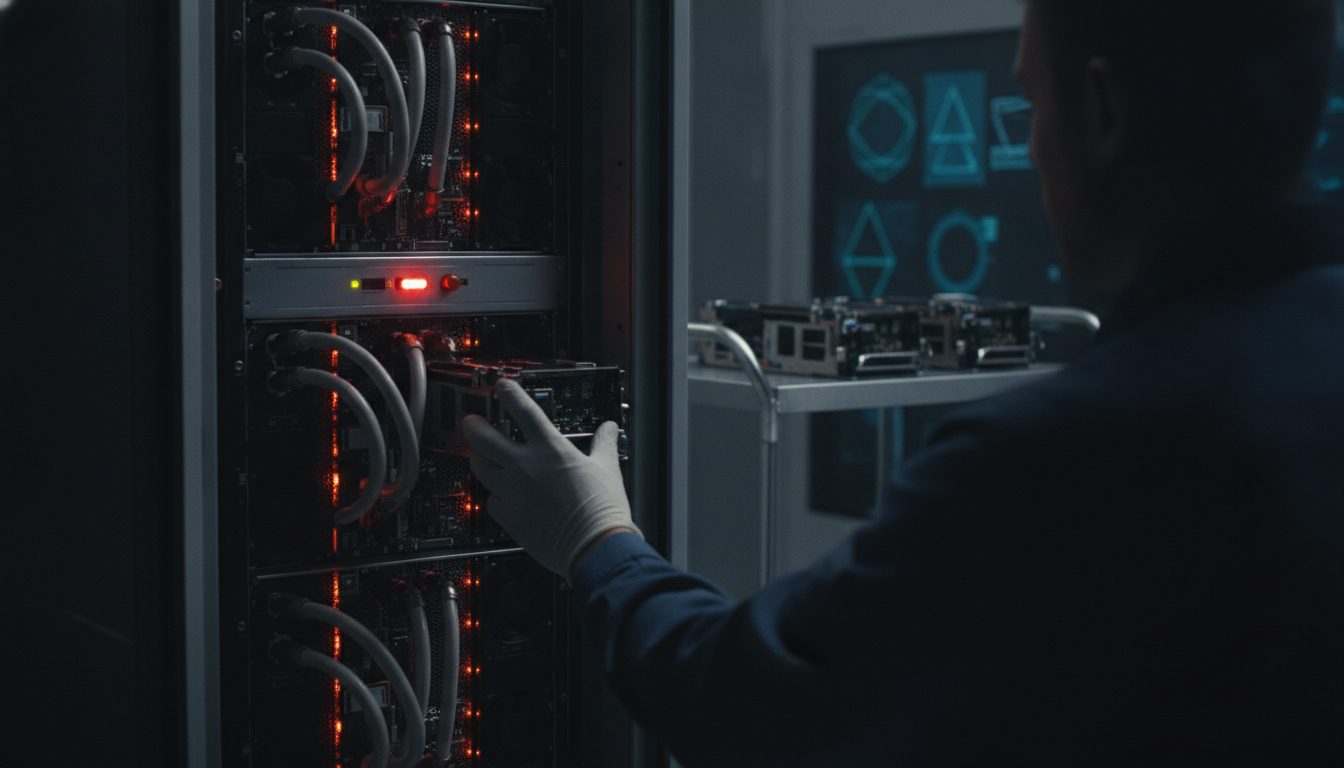
- Training ran on 768 B200 GPUs at sites in Germany and Finland.
- Context window of up to 1 million tokens; weights under Apache 2.0 on Hugging Face.
- Target sectors named by the vendor: public administration, aviation and industry.
Aleph Alpha has released Kolibri, a German-English language model built as a mixture of experts: 78 billion parameters in total, with only about 3 billion doing the math on any single token. The weights are on Hugging Face under Apache 2.0, and training ran on 768 B200 GPUs at sites in Germany and Finland.
A large model that bills like a small one
A mixture-of-experts network routes each token to a slice of the model instead of the whole thing. Kolibri therefore holds the capacity of a 78-billion-parameter model while charging far less compute per request, and it is specified to handle inputs of up to 1 million tokens.
For anyone running it, the gain is operational. Fewer active parameters mean less GPU time per query, even though the full model still has to sit in memory.
German text in the mix, not bolted on later
21.3 percent of the training corpus is German. Aleph Alpha built its own pipeline for German text rather than retrofitting a mostly English model, and the company says Chinese models were used to help generate synthetic training data.
The model was developed under European law with the EU AI Act in view. Keeping both training sites inside Germany and Finland puts the compute, not just the inference, within the bloc.
The vendor's claim and the open questions
For German and English, Aleph Alpha places Kolibri on the Pareto frontier of quality against operating cost: across the comparison field as of March to April 2026, the company says no comparable model delivered more quality at the same cost or the same quality for less. That is a vendor statement rather than a third-party measurement.
No independent benchmark figures were available for this article. Pricing, customer numbers and a second editorial account of the launch could not be checked either, because a request to the FAZ report returned nothing. The reporting here rests on the the decoder story of October 5, 2026.
Who the model is aimed at
The vendor points at public administration, aviation and industry, sectors where data custody and traceability often decide a contract. An Apache 2.0 license lets those buyers run the model on their own hardware instead of calling someone else's endpoint.
FAQ
How many parameters does Aleph Alpha's Kolibri have?
78 billion in total, with roughly 3 billion active per token. The mixture-of-experts design engages only part of the network for each request.
Is Kolibri open source?
The weights are published under Apache 2.0 on Hugging Face, which permits self-hosted and commercial use.
What hardware was Kolibri trained on?
768 B200 GPUs at sites in Germany and Finland, on a corpus that is 21.3 percent German.