Enact Intelligence raises $30M pre-seed for robots
The Swiss startup builds its own force-sensing actuators and pre-trains robot models from scratch, with Yann LeCun and Arthur Mensch as angel backers.
In short
Enact Intelligence — registered as Eta Robotics AG — has closed a $30 million pre-seed round to build its own force-sensing actuators and robot models that work across several body designs.
At a glance
- Round: $30 million pre-seed, announced October 22, 2026.
- Investors: Redalpine, Notion Capital, Firstminute Capital, plus angels Yann LeCun, Arthur Mensch and Thomas Wolf.
- Based in Switzerland, founded in 2026; CEO and co-founder Manuel Yves Galliker, previously at Physical Intelligence.
- Technology: in-house actuators with force and touch sensing; FPGAs planned as on-robot compute.
- Staff hired from Google DeepMind, Amazon, Physical Intelligence and 1X Technologies.
Enact Intelligence has closed a $30 million pre-seed round, an unusually large first raise for a company founded in 2026. SiliconANGLE identifies the legal entity as Eta Robotics AG, based in Switzerland. The angel list reads like a roll call of European AI: Yann LeCun, Mistral AI chief executive Arthur Mensch and Hugging Face co-founder Thomas Wolf.
Touch instead of vision
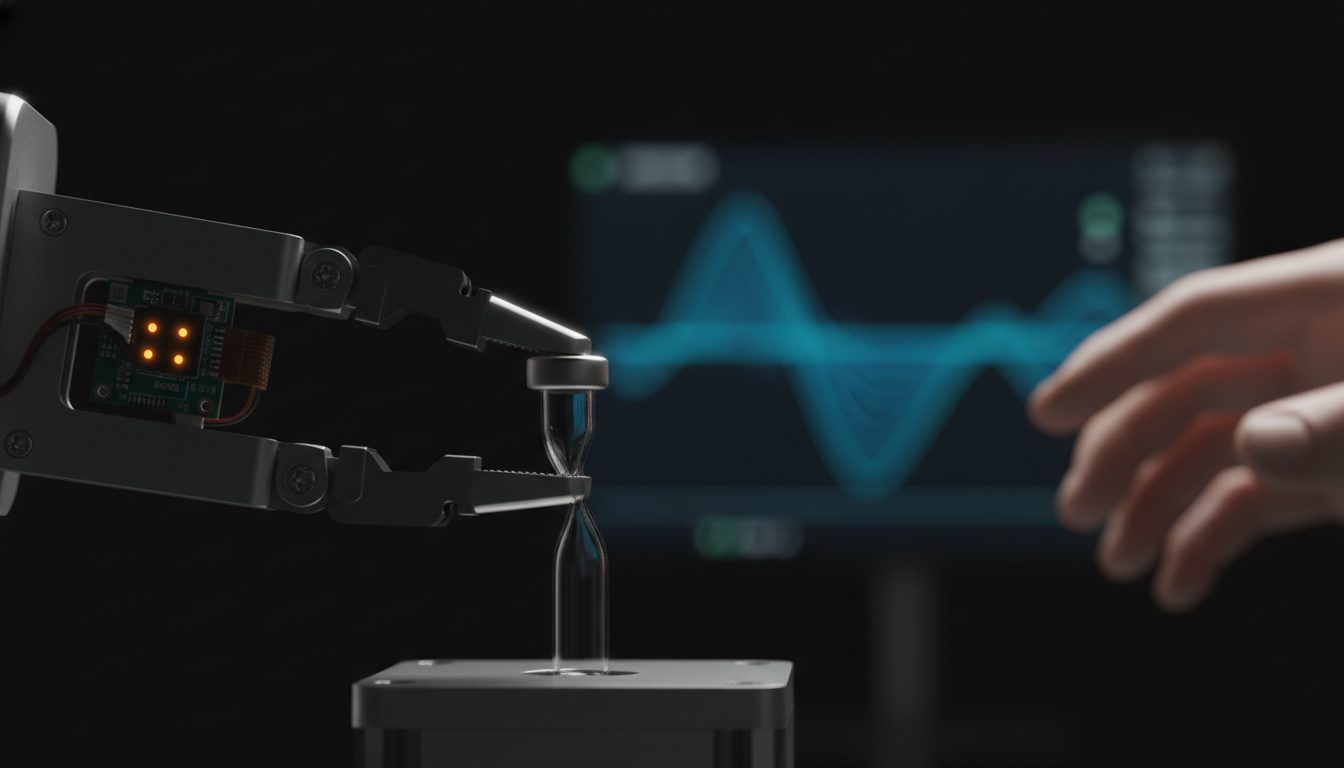
Most robot learning stacks lean on cameras. Enact is betting the robot should feel the task instead: it builds its own actuators with force and touch sensing integrated, so the machine registers contact as it happens. Galliker, the CEO and a Physical Intelligence alumnus, describes the work as “rethinking the full stack” — model architecture, data pipelines, then the actuators and sensors feeding the model. The claimed payoff is more accurate manipulation and learning that needs less data; neither outlet publishes a benchmark for either claim.
One model, many bodies
Rather than tuning algorithms to a single chassis, Enact wants models that carry across robot form factors and configurations. It intends to pre-train from scratch instead of adapting open-weight models, and to put FPGAs on the robot as the compute layer. Both choices cost money up front, which is the plainest reading of why a pre-seed round is this large.
Who is in, and what is missing
Tech.eu names Redalpine, Notion Capital and Firstminute Capital as the institutional investors; SiliconANGLE refers only to a consortium of unnamed venture firms. Neither report gives a valuation, a headcount, a ship date or an industrial customer. The money is earmarked for engineering hires plus hardware and R&D, with recruits coming from Google DeepMind, Amazon, Physical Intelligence and 1X Technologies.
FAQ
How much did Enact Intelligence raise?
$30 million in a pre-seed round, announced on October 22, 2026.
Who is behind Enact Intelligence?
Co-founder and CEO Manuel Yves Galliker, formerly of Physical Intelligence, leads the Swiss company; SiliconANGLE lists its legal name as Eta Robotics AG.
Why does force sensing matter for robots?
Sensing force and touch in the actuator itself lets a robot register contact as it happens, which Enact says allows finer manipulation and more data-efficient learning.