AI boom powers Malaysia's economy: GDP grows 6 percent
Chip exports and data centers drive the strongest quarterly growth in years — Malaysia emerges as an infrastructure winner of the AI buildout.
In short
The global AI buildout has a clear macroeconomic winner in Southeast Asia: Malaysia's gross domestic product grew 6.0 percent year on year in the second quarter of 2026 — up from 5.4 percent in Q1 and well above the 4.4 percent of a year earlier.
At a glance
- Q2 2026 GDP growth: +6.0% year on year (Q1: +5.4%; Q2 2025: +4.4%)
- Released by statistics office DOSM on August 14, 2026
- Growth drivers: electronics exports and increased data center operations
- H1 growth of 5.7% — full-year forecast still kept at 4-5%
- Q2 inflation: 1.9% (core rate also 1.9%)
The global AI buildout has a clear macroeconomic winner in Southeast Asia: Malaysia's gross domestic product grew 6.0 percent year on year in the second quarter of 2026 — up from 5.4 percent in Q1 and well above the 4.4 percent of a year earlier. The statistics office DOSM released the figures on August 14.
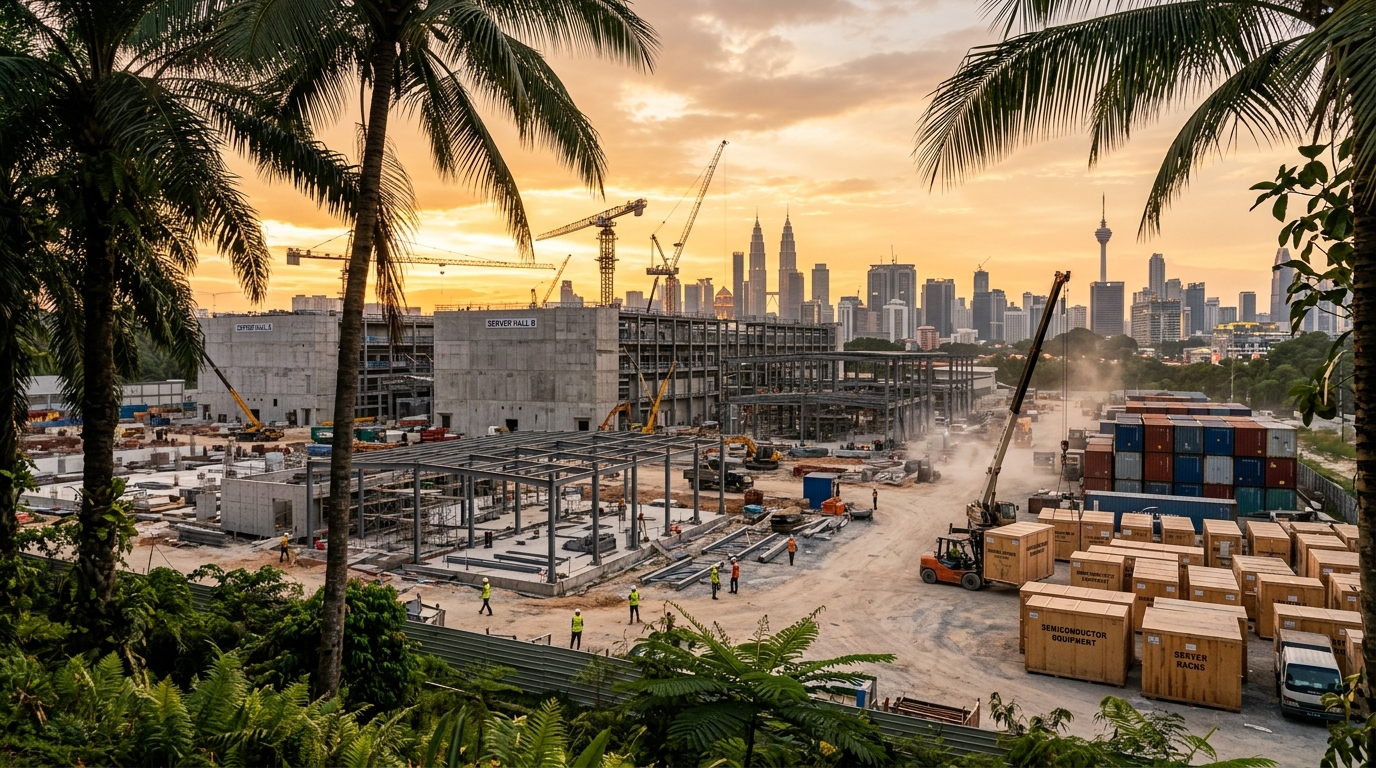
According to the statisticians, growth was driven mainly by electrical and electronics exports and by the services sector, where "increased operations at data centres" contributed notably. Malaysia — especially the state of Johor on the border with Singapore — has become one of Asia's most important data center locations.
HSBC economists attribute the upswing directly to artificial intelligence: the AI boom is driving Malaysia's growth, the bank says — through chip fabrication, testing and packaging as well as the construction and operation of server farms. Chief statistician Siti Asiah Ahmad pointed to the "resilience of domestic economic activity despite a challenging external environment."
The central bank's calm is notable: despite 5.7 percent growth in the first half, Bank Negara is keeping its full-year forecast at 4 to 5 percent — uncertainty over US tariffs and the durability of the data center boom remains high. Inflation stays moderate at 1.9 percent.
For the AI industry, Malaysia shows how widely the value of the infrastructure boom spreads: not just chip designers and model providers benefit, but entire economies along the supply chain — from semiconductor assembly to the power grid. That also leaves the region exposed should the buildout stall.
FAQ
Why is Malaysia growing so fast?
The country benefits twice from the AI buildout: through semiconductor manufacturing and exports, and through rapid data center construction, especially in Johor near Singapore.
Is the growth sustainable?
The central bank stays cautious, keeping its 4-5% full-year forecast — citing US tariff risks and the open question of how long the data center boom will last.
What does it mean for the AI industry?
The infrastructure boom creates value far beyond tech companies — entire economies now depend on the pace of the AI buildout.