Muse Gadgets: Meta Opens AI Hardware to DIY Builders
ESP32 firmware, a Linux SDK and Apache 2.0 code let hobbyists build their own Muse devices, and Meta is giving away 5,000 Home Link dongles.
In short
Meta's Muse Gadgets release ships Apache 2.0 firmware for ESP32 boards plus a Linux SDK, so hobbyists can hook homemade devices up to the Muse AI agent.
At a glance
- Muse Gadgets ships firmware for ESP32 boards and a Linux SDK, with the code released under the Apache 2.0 license.
- Homemade devices connect to Meta's Muse AI agent, and the project is supported through a Discord community.
- Muse Home Link is a small USB-C device that links Muse to a home network and drives gear over HTTPS interfaces.
- Meta produced 5,000 units, ship-ready within weeks and free for Muse subscribers while supplies last.
- Announced October 3, 2026; Meta's Ray-Ban glasses are described as the most commercially successful AI gadget so far.
Meta has published Muse Gadgets, an open-source kit that lets hobbyists wire hardware of their own into the company's Muse AI agent. The release covers firmware for ESP32 microcontroller boards and an SDK for Linux, all under the Apache 2.0 license. Builders coordinate in a Discord community.
What you actually get
Two pieces, not a finished product. The firmware targets ESP32 boards, a microcontroller family long popular with makers, and the Linux SDK covers anything larger that should behave as a Muse endpoint. Apache 2.0 is permissive, so commercial reuse is on the table.
Meta's own device: the Muse Home Link
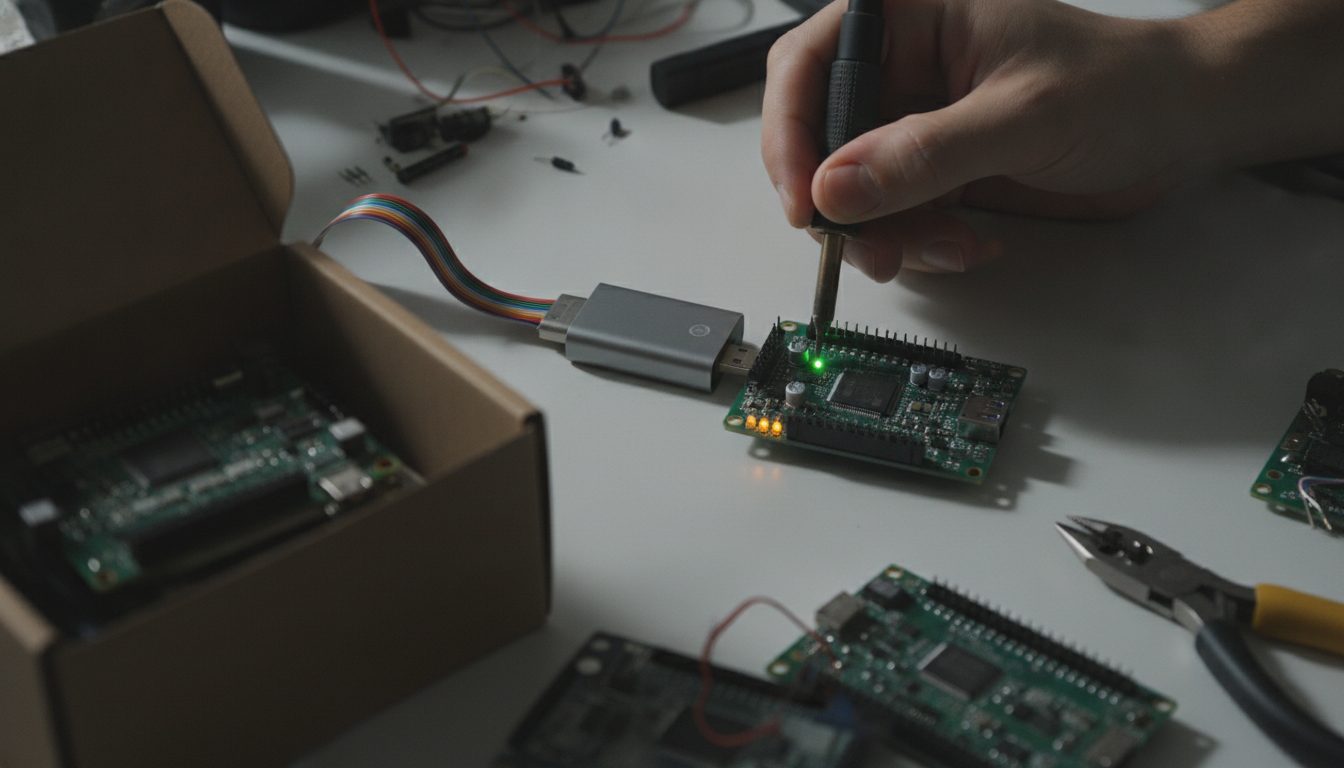
Alongside the kit, the team built the Muse Home Link, a small USB-C device that puts Muse on a home network. From there it can drive televisions, speakers and anything else exposing an HTTPS interface. Meta made 5,000 of them; they are due to ship within weeks and cost Muse subscribers nothing while stock lasts.
Open source as market research
Letting the community build is also a way to learn what people want. No dominant shape for AI hardware has emerged yet, and watching which homemade form factors catch on is a cheaper signal than guessing. Apple and OpenAI are developing devices of their own, while Meta's Ray-Ban glasses remain the most commercially successful AI gadget on the market so far.
What we could not confirm
The coverage we read lists no repository addresses, no exact ESP32 variants, no price for non-subscribers and no shipping countries. How many of the 5,000 units go to any single region is also unstated. We are flagging these as unverified rather than filling them in.
FAQ
What is Meta's Muse Gadgets project?
An open-source kit combining firmware for ESP32 boards with a Linux SDK, letting hobbyists connect self-built hardware to Meta's Muse AI agent. The code is released under the Apache 2.0 license.
What does the Muse Home Link cost?
The USB-C device is free for Muse subscribers while the 5,000 produced units last. The coverage we read gives no price for non-subscribers.
What hardware do I need to build a Muse device?
Either an ESP32 board for the firmware or a Linux system for the SDK. Which specific ESP32 variants are supported is not stated.