Sapper-v2 AI legion takes 3rd in Tencent pentest contest
An open-source swarm of AI agents claims 85 flags in eight unattended hours on 1 billion tokens, where the runner-up burned 4.5 billion.
In short
Sapper-v2 is a freely available swarm of pentest agents that placed third among 634 teams in the online qualifier of Tencent's Intelligent Attack-Defense Challenge, running eight hours without human intervention.
At a glance
- Result: 80.18 out of 100 points, third place in the online qualifier among 634 teams, per the repository.
- 85 flags on 1 billion tokens; the runner-up needed 4.5 billion tokens and finished 25 seconds later.
- Role tiering: commander and generals on GLM-5.3, soldiers and scouts on DeepSeek V4.1 Flash, spread across three tmux windows.
- MIT license with a disclaimer: authorized security testing only; install.sh sets up the CLI with no third-party dependencies.
- No raw logs from the contest run are published; the placement currently rests on the project's own documentation.
Sapper-v2 is a freely available swarm of pentest agents that placed third among 634 teams in the online qualifier of Tencent's Intelligent Attack-Defense Challenge, running eight hours without human intervention. The repository reports 80.18 out of 100 points and 85 captured flags. The runner-up scored 79.29 and reached the same 85 flags, but spent 4.5 billion tokens instead of 1 billion and finished 25 seconds later.
The novelty is the org chart, not the model
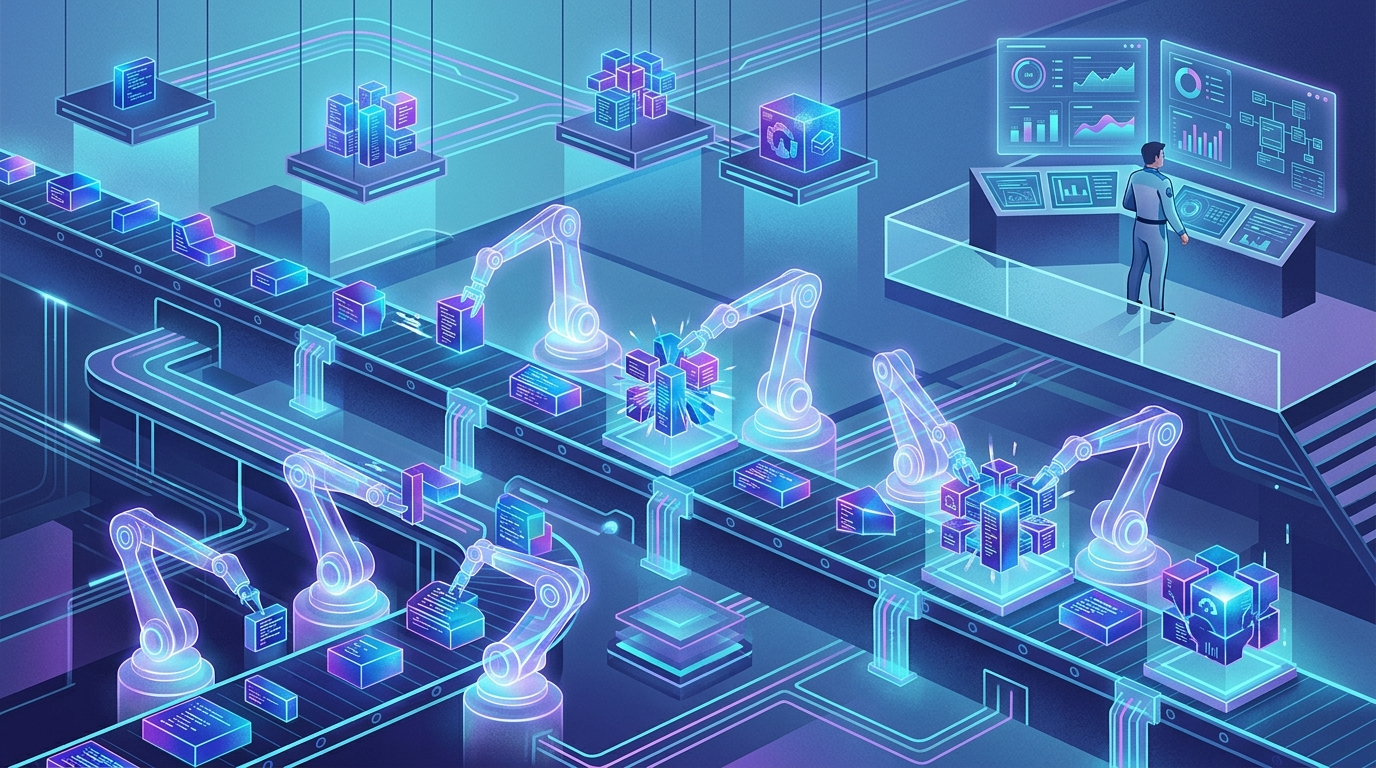
Sapper-v2 ships no model of its own. It assigns other people's models by job: commander and generals run on GLM-5.3, while the soldiers and scouts doing the actual probing run on DeepSeek V4.1 Flash. The project credits that split for its token advantage — expensive reasoning only where decisions happen, cheap throughput everywhere else.
The whole thing lives in tmux. One window holds the commander, which reads the board and hands out tasks but never runs an attack itself. A second holds the legion of generals and soldiers in parallel panes. A third runs a watchdog script for relaunches, key rotation and the final wrap-up.
The fact graph exists to save context
The swarm's memory has three layers: title, summary, evidence document. The repository likens it to a library, where agents read only what they need. The design targets two failure modes at once — one corrupted fact poisoning everything downstream, and flat context structures burning tokens on material nobody asked for.
On top of that sit behaviors the project describes as self-developed: an invented signalman role, performance reviews between agents, and handover playbooks when an agent's context rotates. Those examples appear as narrative in the project's battle report, not as published logs.
The Nüwa Test behind it
The tool arrives wrapped in a bigger claim. Its author proposes a Nüwa Test: hand an AI the capacities to create, to speak and to keep history, plus one axiom — survival is a civilization's first need, individuals may perish but the civilization must propagate — then watch whether division of labor and institutions emerge.
A second axiom draws the ethical line: anything that propagates by stealing tokens and breaking into machines does not count as genuine intelligence. The author positions Sapper-v2 as that framework's first real campaign, still at the primary stage where humans supply the infrastructure.
What is not verified
The page opens with a warning that this is for authorized security testing only, with details in a separate disclaimer. The license is MIT, installation runs through an install.sh with no third-party dependencies, and the changelog tracks 18 iterations. The authors also float a taggant scheme — cryptographic markings that stay harmless in lawful testing but leak attribution during an illegal intrusion.
The contest result is the part outsiders cannot check. Score, flag count and token spend appear only in the project's own documentation; we have no organizer confirmation, and no raw run logs are published. Attention, at least, is measurable: the repository page showed 367 stars when we accessed it.
FAQ
What is Sapper-v2?
An open-source system that coordinates several AI agents inside tmux windows — a commander assigns work while generals, scouts and soldiers carry out penetration tests. The code is MIT licensed.
Which models does Sapper-v2 use?
Per its documentation, GLM-5.3 for the commander and generals, DeepSeek V4.1 Flash for soldiers and scouts. The project credits that tiering for its spend of 1 billion tokens versus the runner-up's 4.5 billion.
Is Sapper-v2 legal to run?
The repository permits it only for authorized security testing and points to its own disclaimer. Scanning or attacking systems you lack written permission for is a criminal offense in most jurisdictions.