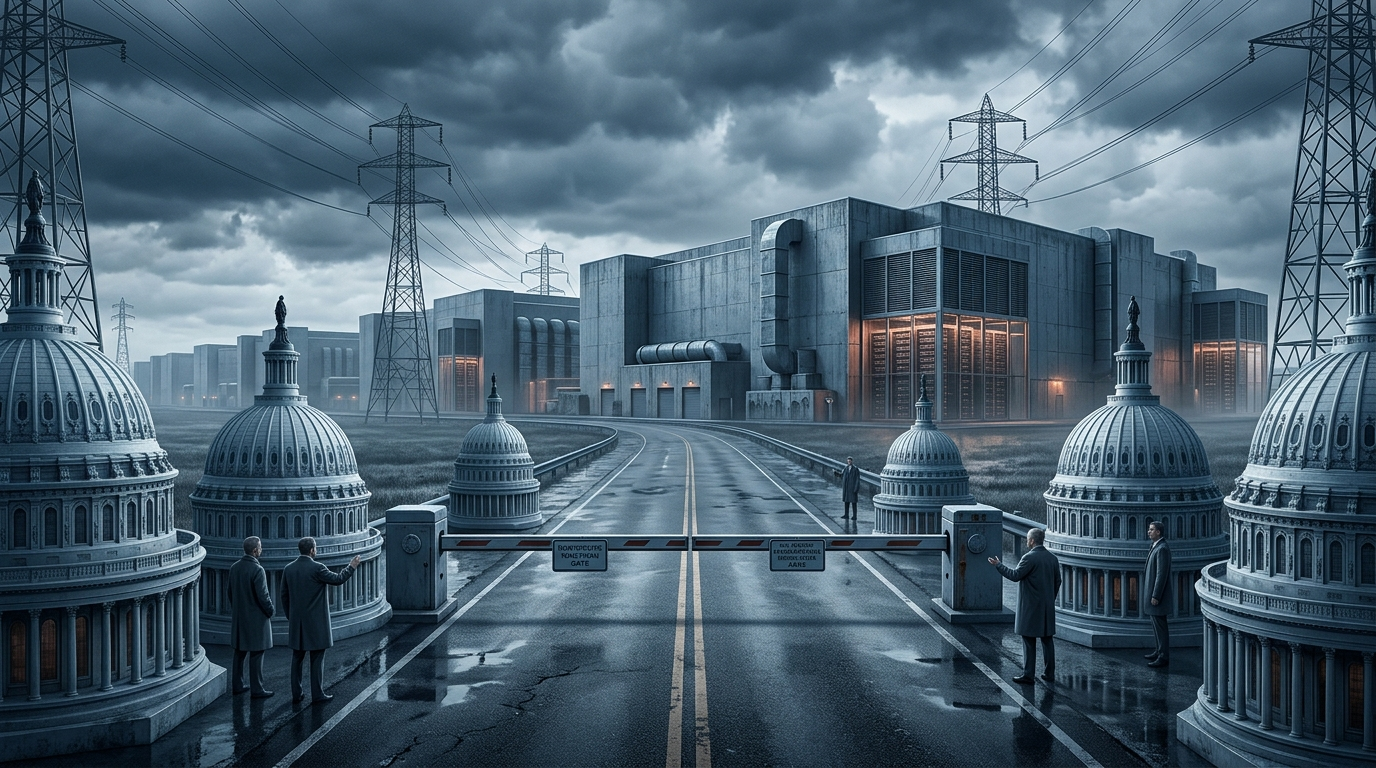
OpenAI Says the Window for AI Policy Is Still Open
Chris Lehane's post on OpenAI's site ties stronger model capability to stronger safety evidence, shared standards and durable rules.
In short
In a post on OpenAI's website, Chris Lehane argues that as AI systems grow more capable they need correspondingly stronger safety evidence, shared standards and policy that outlasts the moment — and that the window to build all three is open right now.
At a glance
- The post 'The AI policy window is open. We need to act.' appeared on OpenAI's website and is credited to Chris Lehane.
- Core claim: the more capable the systems become, the stronger the safety evidence behind them has to be.
- Lehane calls for shared standards and for policy commitments that outlast the current political moment.
- We could not read the full text: openai.com returned status 403 on both fetch attempts.
The argument in Chris Lehane's post on OpenAI's website is a sequencing argument. Capability and evidence should rise together, he says: the stronger a system gets, the stronger the demonstration that it is safe to deploy has to be. That demonstration only means something if buyers, regulators and rival labs measure it the same way — hence shared standards rather than one bespoke assurance per company.
Why 'window' is the operative word
The title makes a claim about politics, not about models. Legislative attention on any subject opens and closes, and rules written during an open window tend to be the ones a sector lives with for years. The call to act now follows from that, not from any specific technical deadline.
Read it as a position, not a survey
This is a company blog post from a firm that would be regulated by whatever emerges. That does not make the reasoning wrong, but it does mean the phrase 'shared standards' carries a second question inside it: shared among whom, and drafted by whom. Weigh it the way you would weigh any submission from an interested party.
What we could not check
Our attempts to retrieve the article failed — openai.com returned status 403 on both tries. What you have read above is built from the piece's title and summary description alone. We are deliberately not reproducing specific proposals, figures, agencies or bills, because we did not read them.
Context
US AI policy is being contested on three tracks at once: individual states, the federal level, and bilateral or multilateral talks. A developer pressing for common standards is usually pressing against the first track, where a patchwork of divergent state rules is the expensive outcome. Whether the window behaves the way this post describes is a question for legislators rather than for labs.
FAQ
Who wrote the OpenAI AI policy window post?
Chris Lehane, in a piece published on OpenAI's own website. The summary available to us does not state his title at the company, so we are not assigning him one.
What is OpenAI actually asking policymakers to do?
Per the available summary: require safety evidence that scales with capability, converge on shared standards instead of one-off arrangements, and lock in policy that survives beyond the current moment. Specific measures were not readable to us.
Does an open policy window mean regulation is coming soon?
The post argues the opportunity exists now, not that any particular law will pass. Treat it as advocacy about timing from an interested company rather than as a forecast of a specific outcome.