Anthropic Runs Its Own Biology Lab in the Bay Area
Claude models now steer real lab instruments through an in-house protocol, as Anthropic's own staff keep warning about biological misuse.
In short
Anthropic has a physical biology lab in the Bay Area where Claude models drive real instruments through its Model Hardware Standard protocol, aimed at basic biology rather than drug discovery.
At a glance
- Location: the Bay Area; led by Eric Kauderer-Abrams, who runs life sciences at Anthropic.
- In-house Model Hardware Standard (MHS) protocol, built with Virginia research center HHMI.
- Claude Mythos 5.1 test: 12 candidate molecules, a 50 percent hit rate against a usual 10 to 15 percent.
- Coefficient Bio bought in April 2026 for a reported $400 million; Novo Nordisk deal announced.
- Not disclosed: lab name, headcount, budget or specific biosecurity controls.
Anthropic is running a physical biology lab in the San Francisco Bay Area, and Claude models operate the instruments inside it. Eric Kauderer-Abrams, who leads life sciences at the company, confirmed the operation on September 18, 2026. His argument is blunt: biology is ultimately settled at the bench, not in silico. The work targets basic biology rather than drug discovery, the company says.
The protocol that hands Claude the hardware
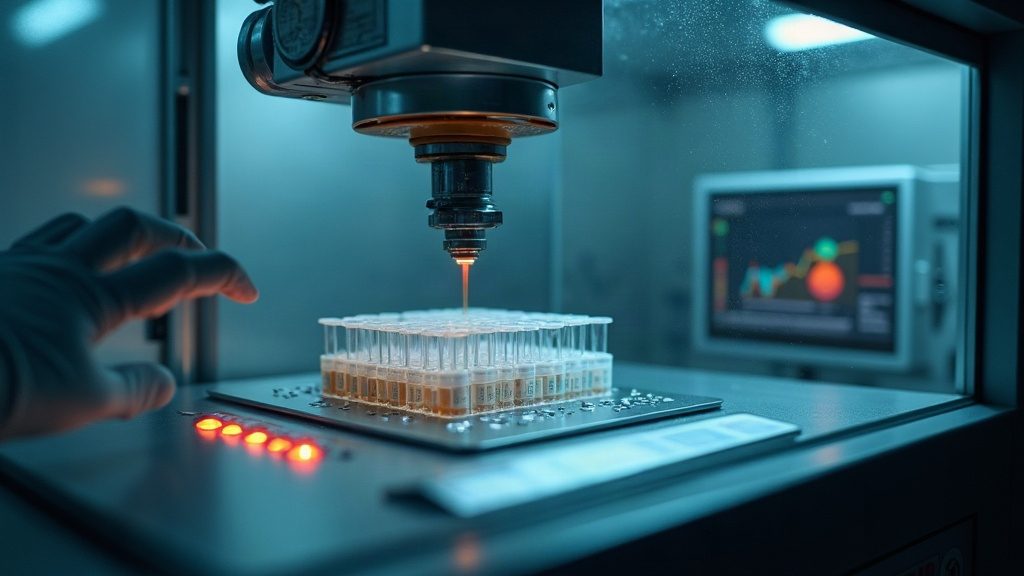
The connective tissue is an internal protocol called the Model Hardware Standard, or MHS. It lets a model drive lab equipment, catch errors mid-experiment, correct them, and write its own hardware automation scripts. Robots handle the repetitive bench steps at the instrument.
Anthropic built MHS with HHMI, a Virginia-based medical research organization, according to SiliconANGLE. Neither report lists which instrument classes are actually wired up.
One number, no outside check
The company's showcase result involves Claude Mythos 5.1 designing high-affinity binders. The model produced 12 candidate molecules, and Anthropic puts their hit rate at 50 percent, against the 10 to 15 percent that protein design projects typically reach. That figure comes from Anthropic itself. No independent replication appears in either report.
Bought, vetted, partnered
The lab sits on top of a buildout that began earlier this year. Anthropic acquired Coefficient Bio, a stealth AI biotech, in April 2026 for a reported $400 million. The same week as the lab news, it opened a Life Sciences Verification Program giving vetted biology researchers access to its strongest models, and it announced joint drug-discovery work with Novo Nordisk. Some bench work goes to outside partners who remain unnamed.
The house is arguing with itself
Anthropic is expanding into the exact field its own people flag as dangerous. TechCrunch sets the lab news against the departure of researcher Jacob Coxon, who warned on his way out that AI could kill us all by the end of the decade. The company's alignment lead puts extinction risk above 10 percent over the same horizon. Chief executive Dario Amodei has named bioterrorism among AI's major risks while urging the industry to slow down.
What neither report answers
There is no lab name, no headcount and no budget in either account. Containment level, regulatory oversight and the biosecurity rules governing the experiments all go unmentioned. Nor is there published data behind the 50 percent hit rate. The lab is confirmed; the guardrails around it are not.
FAQ
Where is Anthropic's biology lab?
In the San Francisco Bay Area. Neither TechCrunch nor SiliconANGLE gives a lab name, an address or the size of the site.
What is the Model Hardware Standard?
A protocol Anthropic developed with HHMI that lets a Claude model control lab instruments, spot and fix experiment errors, and write hardware automation scripts.
How strong was the Claude Mythos 5.1 result?
Anthropic reports 12 candidate molecules and a 50 percent hit rate, against the 10 to 15 percent usual in protein design. No outside party has verified that number.