Suncatcher: Google Launches AI Chips Into Orbit
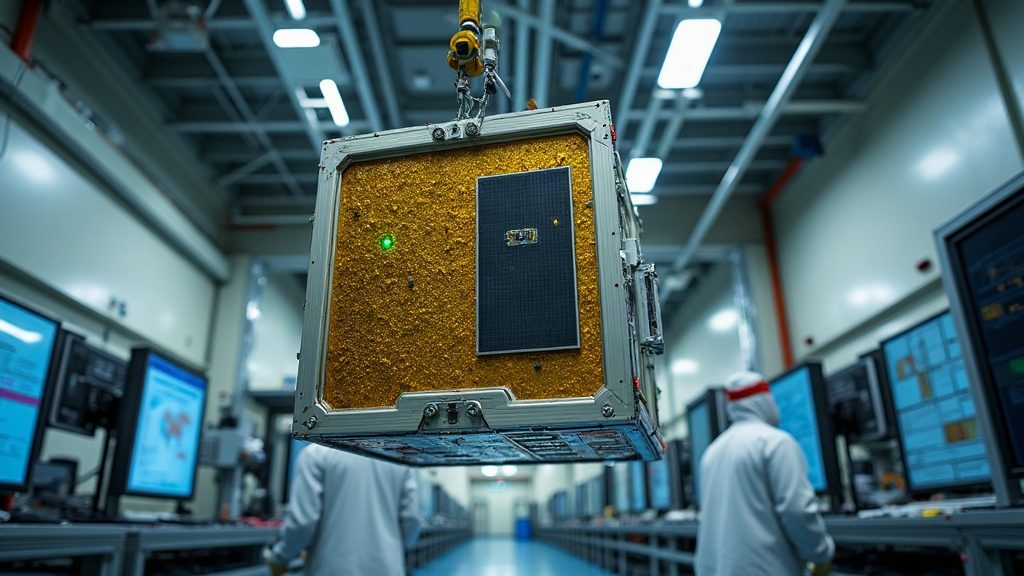
A refrigerator-sized prototype carrying four TPUs is set to ride a Falcon 9 on October 1 and operate in orbit for five years.
In short
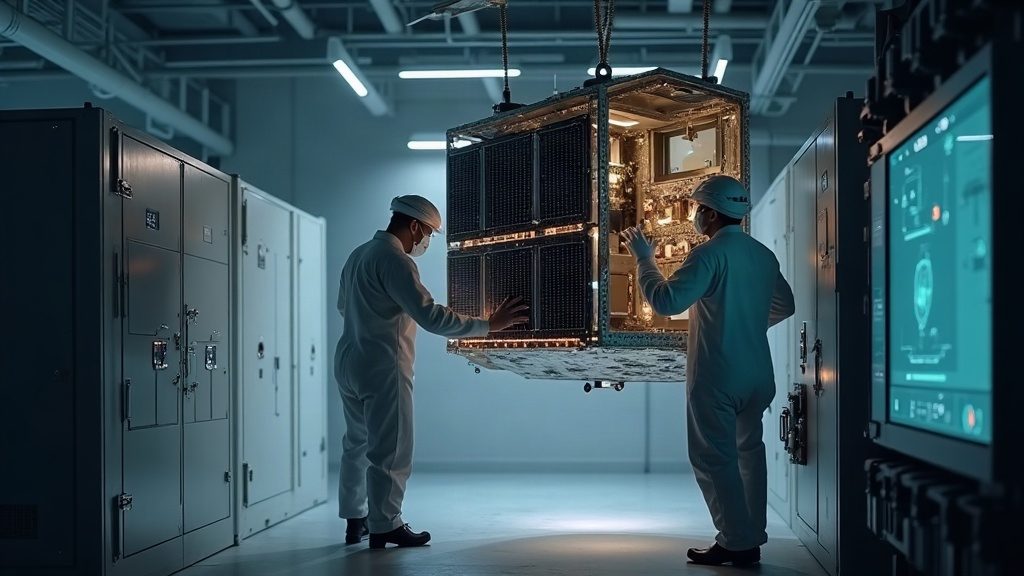
With Project Suncatcher, Google will run its own AI accelerators in Earth orbit for the first time starting October 1, 2026 — as a single prototype satellite, not a data center.
At a glance
- Launch: October 1, 2026, on a SpaceX Falcon 9 from Vandenberg Space Force Base, California.
- Payload: a refrigerator-sized prototype with four TPUs, built at the Planet Labs lab in San Francisco.
- Planned orbital service life: five years; its task is answering simple AI queries from space.
- Roughly 10,000 satellites would be needed to replace one 1-gigawatt ground data center.
- Launch costs would have to drop to about $200 per kilogram; Jeff Bezos cites up to 20 years.
With Project Suncatcher, Google will run its own AI accelerators in Earth orbit for the first time starting October 1, 2026 — as a single prototype satellite, not a data center.
What actually goes up
The payload is a refrigerator-sized experimental satellite built at the Planet Labs lab in San Francisco. It flies on a SpaceX Falcon 9 out of Vandenberg Space Force Base in California. Handelsblatt reports four Tensor Processing Units aboard — Google's own AI silicon — with a planned service life of five years.
The assignment is deliberately small: answer simple AI queries from orbit. Google vice president James Manyika and project manager Travis Beals are driving the effort.
One satellite, and then four orders of magnitude
The distance between this test and the stated goal is the story. Replacing a single 1-gigawatt ground data center would take roughly 10,000 satellites. Economics are the second wall: orbital compute only pencils out once launch costs fall to around $200 per kilogram. Jeff Bezos puts the crossover, when space beats the ground on cost, up to 20 years out.
Why the test cannot happen on the ground
Three conditions have no terrestrial equivalent. A vacuum offers no air to carry heat away, cosmic radiation hits the chips unfiltered, and links run between platforms moving relative to each other.
Some of that is testable in advance. Google exposed hardware to proton beams in the lab to approximate radiation damage, and launch vibration and g-loads can be rehearsed on a shake table. What remains is the part that only flight settles.
Google is not alone up there
SpaceX and Blue Origin are pursuing orbital data center concepts of their own, and Elon Musk has promoted the idea for years. The motive is grounded: opposition to large AI data centers is growing in US communities, and orbit is one way around the siting fight.
What has not been confirmed
Google has published neither the prototype's cost nor the compute the four chips deliver, and it has not named the TPU generation. A third report on the project sat behind a paywall and could not be evaluated for this article. Until the vehicle leaves the pad, the October 1 date is a schedule, not an outcome.
FAQ
What is Google's Project Suncatcher?
An effort to move AI compute into Earth orbit and run it on solar power. The first step is one test satellite carrying four TPUs, not an operational data center.
When does Google's Suncatcher satellite launch?
October 1, 2026, aboard a SpaceX Falcon 9 from Vandenberg Space Force Base in California. The satellite is designed to operate for five years.
Are data centers in space cheaper than on Earth?
Not yet. Launch costs would need to fall to roughly $200 per kilogram, and about 10,000 satellites would be required to match one 1-gigawatt ground facility. Jeff Bezos estimates up to 20 years.