Japan Airports Turn to AI and Drones for Inspections
Trading house Sumitomo leads a plan to check runways, lights and other airport infrastructure automatically, aiming to double maintenance efficiency.
In short
Japanese airports plan to use AI and drones to catch faults in runways, lighting and other infrastructure, in a Sumitomo-led effort meant to double inspection efficiency.
At a glance
- AI is to spot problems with runways, airfield lighting and other airport infrastructure.
- Trading house Sumitomo leads the initiative, according to the report.
- The stated goal is to double the efficiency of these checks.
- Narita and Haneda are to grow from 830,000 to 1 million combined slots a year.
- Not established: timeline, cost, and the specific drone and software systems used.
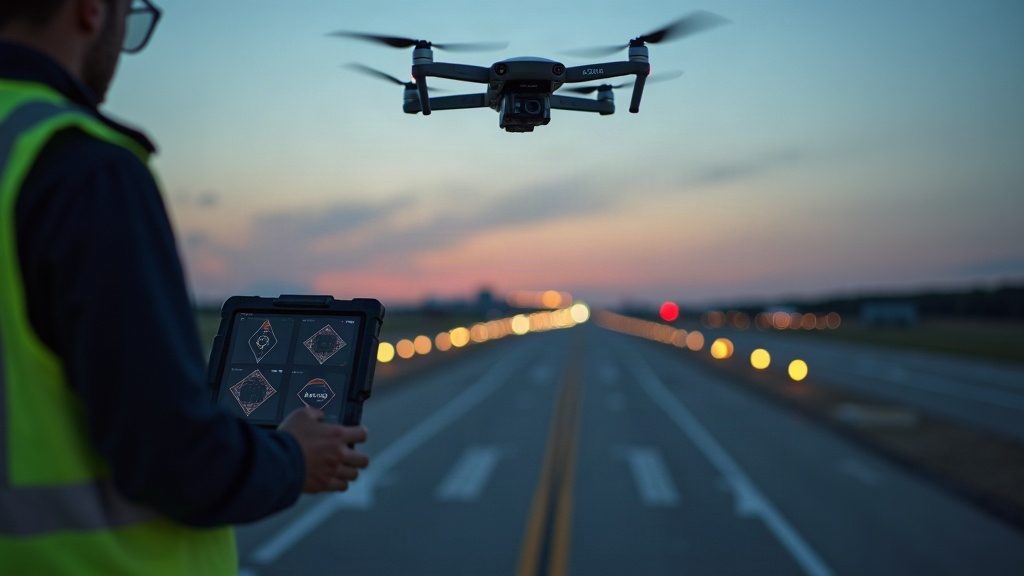
Japan wants its airports to find infrastructure faults before those faults reach the schedule. According to a report by Nikkei Asia, artificial intelligence will be used to spot problems with runways, airfield lighting and other installations, in a project led by trading house Sumitomo. The stated aim is to double efficiency.
What the report actually establishes
Three points are firm: AI is meant to find faults in runways, lighting and related infrastructure, Sumitomo leads the effort, and the target is a doubling of efficiency. The pressure behind it is thin ground staffing at a moment when inbound traffic keeps climbing.
Drones appear in the report's headline. The part of the article available to us does not name the aircraft, the sensor payloads or the software that processes what they see.
The capacity squeeze: 830,000 slots to 1 million
Japan intends to raise combined annual takeoff and landing slots at Tokyo's Narita and Haneda airports from 830,000 to 1 million. That is roughly 20 percent more movements across the same concrete.
Inspection is where that math bites. Every walk-down of a runway consumes operating time, and a denser schedule leaves fewer windows to spend on it. Checks flown from the air, or run over captured imagery, attack exactly that constraint.
What we could not verify
This story rests on a single newsroom, and the article text was only partly reachable for us. The timeline, the investment figure, which airports beyond Narita and Haneda take part, and every product name remain unverified.
It is also unclear whether the doubling of efficiency is a target or a measured result from a pilot. We are recording that as open rather than rounding it into a claim.
Why this case differs from most AI pilots
Airfield inspection is an unusually tractable target for automation. The objects under review are fixed in place, catalogued and inspected on a repeating cycle, and the defects that matter, such as an unlit fixture or a crack in the pavement, are visually well defined.
That shifts the hard part away from the model and toward logistics and approval: flight clearance for drones inside airport airspace, handing findings to maintenance crews, and liability when a defect is missed. The portion of the report we can read addresses none of these.
FAQ
What will AI and drones inspect at Japanese airports?
The report points to runways, airfield lighting and other infrastructure, with the aim of catching problems early. The accessible text does not describe the inspection methods in detail.
Who is behind the project?
The report names Japanese trading house Sumitomo as the leading player. It does not identify the participating airport operators or technology partners.
When does it start and what does it cost?
Both are open. The portion of the report available to us gives neither a timeline nor an investment figure, and we are not supplying a number of our own.