South Korea's Physical AI Boom: Robots Behind the Bar
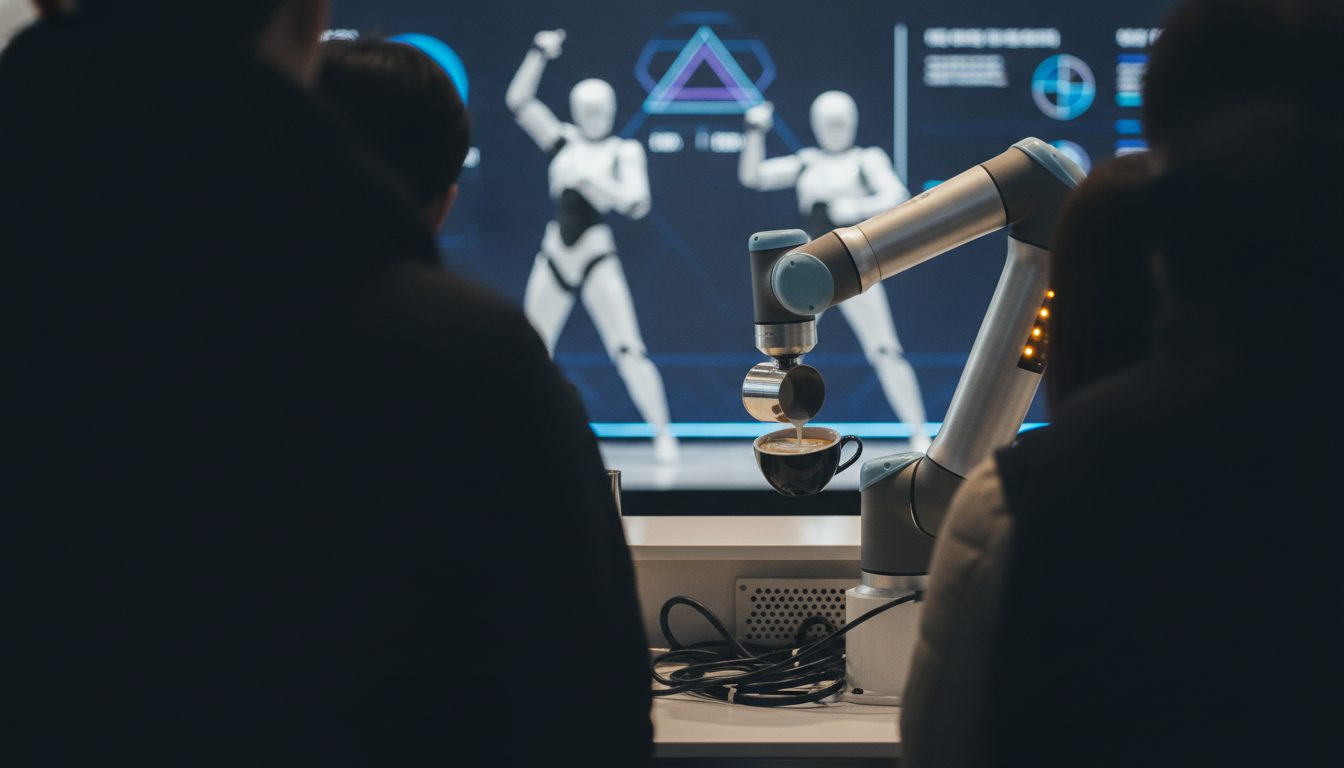
Nikkei Asia reports that physical-AI entertainment venues are multiplying in South Korea, with robot baristas serving guests and humanoids dancing to K-pop.
In short
South Korea is gaining a growing number of entertainment venues where physical-AI robots pour coffee and dance to K-pop beside guests, according to Nikkei Asia.
At a glance
- Source: Nikkei Asia report by Nami Matsuura, published October 11, 2026.
- Core claim: venues built around physical-AI robots are spreading across South Korea.
- Named attractions: robot baristas, plus humanoids that dance to K-pop alongside people.
- Unverified: only the opening paragraph was readable on retrieval, so no figures are confirmed.
South Korea is gaining a growing number of entertainment venues where physical-AI robots pour coffee and dance to K-pop beside guests, according to Nikkei Asia. The report, by Nami Matsuura and dated October 11, 2026, casts these rooms as places where the public watches robotics progress happen in front of them instead of reading about it.
A coffee counter is a real stress test
Physical AI is the part of the field that has to move something, not just generate a sentence. Pouring a drink means judging where a cup actually sits, how liquid behaves when the arm accelerates, and what to do when a customer reaches in at the wrong moment. Dancing next to people adds timing and clearance to that list. None of it happens behind a factory cage.
Why a ticketed room beats a lab demo
A paying venue gives a robotics company two things that are hard to buy: daily revenue and long hours in front of unpredictable humans. Every order is a record of a successful grip, a fumble, or a queue that got too long. That is closer to an endurance run than to a trade-show loop. It also sits neatly on top of a country that both manufactures hardware and exports pop culture.
What the report does not establish
Unit counts, ticket prices, revenue and funding figures were not readable when we retrieved this article, because the Nikkei page served only its opening paragraph at that point. We therefore list no number, no company name and no location as confirmed. How many of these venues exist, and how dependably the machines hold up across a full day of service, is not answered by this source. Readers who need that detail should go to the full Nikkei Asia piece.
The claim that is still open
Putting robots where people pay for an experience is not a detour from serious robotics. An arm that pours milk for hours without breaking a cup says more than a clip shot under lab lighting. But a stage forgives a dropped cup, and a factory floor or a care ward does not. That jump, from attraction to routine duty, is not something this report demonstrates.
FAQ
What does physical AI mean?
It refers to AI systems that act in the physical world, controlling a robot's motion rather than only producing text or images. In the South Korean case, that means arms preparing drinks and humanoids performing dance routines.
Which companies run South Korea's robot cafes?
Nikkei Asia describes the trend as a nationwide shift but names no operator or address in the portion of the article we were able to read, so we list no company as confirmed.
Are humanoid robots safe to dance next to?
Safe operation around people depends on sensing, clearance limits and a working emergency stop. This report does not describe the safeguards used at the South Korean venues, and we will not guess at them.