Study: expressive robots lose trust faster after mistakes
Gestures and eye contact build rapport — but after errors, expressive robots' influence drops by more than half, a Science Robotics brain study shows.
In short
Human-like behavior is a double-edged sword for robots: a new Drexel University study shows expressive humanoids build trust faster — but also lose it much harder after mistakes.
At a glance
- Published in Science Robotics 2026; Drexel University, senior author Hasan Ayaz
- 50 adult participants, sessions of ~2.5 hours each with a Pepper robot
- After mistakes, the expressive robot's influence dropped by more than half
- Methods: fNIRS brain imaging, oxytocin saliva samples, trust surveys
- Oxytocin rose during errors — read as a vigilance signal, not bonding
Human-like behavior is a double-edged sword for robots: a new Drexel University study shows expressive humanoids build trust faster — but also lose it much harder after mistakes. When the robot erred, its measurable influence on participants' decisions dropped by more than half.
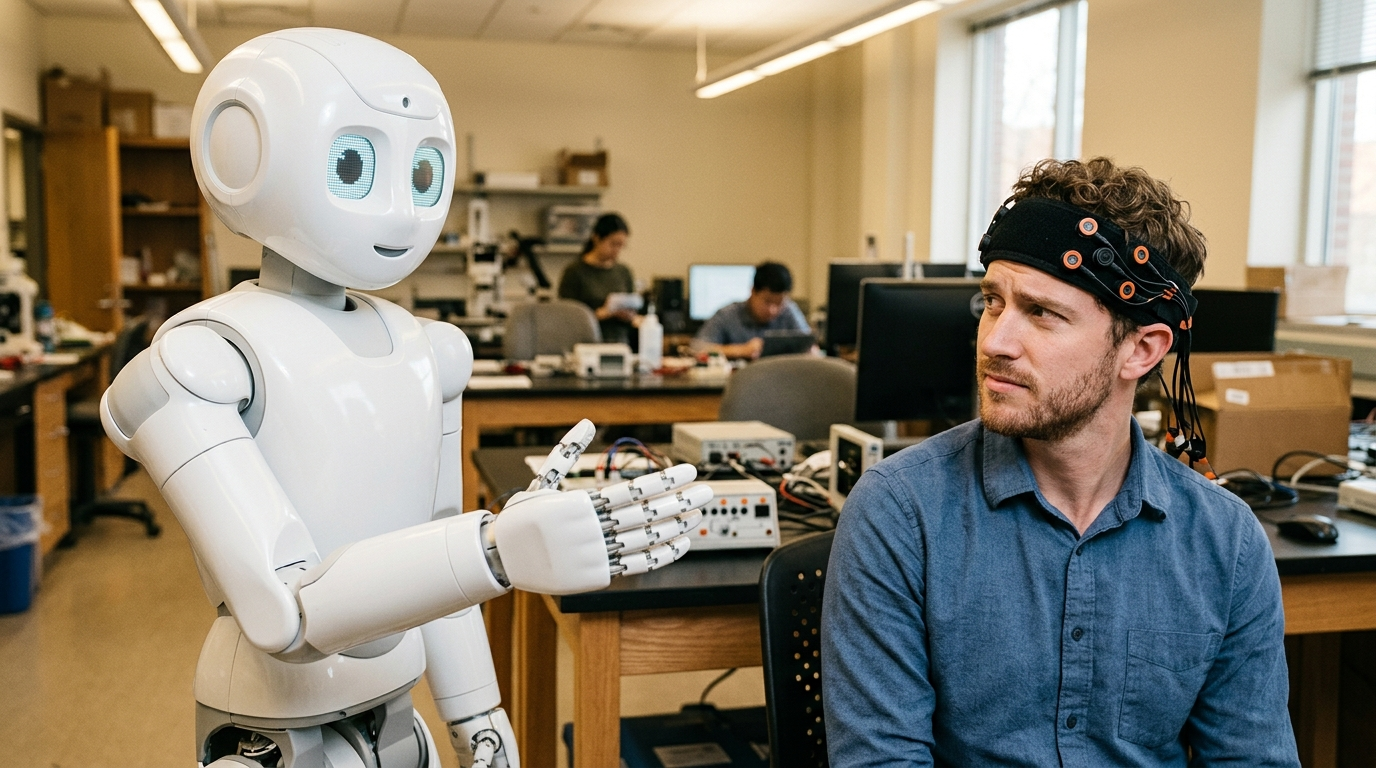
For the study, published in Science Robotics, 50 adults completed sessions of about two and a half hours each with the humanoid Pepper — in two versions: one with eye contact, gestures, nodding and affirmations, one motionless with identical dialogue. Two error-free rounds were followed by a session with deliberate mistakes.
The team around senior author Hasan Ayaz combined three layers of measurement: brain activity via functional near-infrared spectroscopy (fNIRS), the bonding hormone oxytocin via saliva samples, and classic trust surveys. Errors by the expressive robot triggered brain patterns otherwise associated with violations of social norms.
The surprise: while reported trust fell, oxytocin levels rose during the error sessions. The researchers read this not as bonding but as a vigilance signal. "Expressiveness is not free. It buys you engagement, and it buys you fragility at the same time," comments neuroscientist Frank Krueger of George Mason University.
For makers of service and care robots, this is a design warning: the more human-like a machine acts, the harder users punish its mistakes. Anyone deploying humanoids in retail, homes or care settings needs either very high reliability — or deliberately restrained behavior.
FAQ
What did the study test?
50 adults interacted with an expressive and a motionless Pepper robot; researchers measured brain activity, oxytocin and reported trust — before and after deliberate robot errors.
What is the core finding?
Expressive robots build rapport faster but lose trust disproportionately after errors: their influence on decisions dropped by more than half.
What does it mean in practice?
Human-like design only pays off with high reliability. For error-prone systems, a more neutral presentation may better protect user trust.