Exein raises $270M to secure robots and vehicles
The Rome-based firm hardens the operating systems of robots and cars. Its valuation jumped from $700 million in December 2025 to $1.7 billion.
In short
Exein raised $270 million at a $1.7 billion valuation to secure the operating systems of robots, vehicles and industrial machines at the kernel level.
At a glance
- Round: $270 million, led by Headline. Post-money valuation: $1.7 billion.
- The December 2025 valuation was $700 million; more than $600 million has been invested in Exein in total.
- Photon, the core product, ships on more than 2 billion connected devices, according to the company.
- First-half 2026 annual recurring revenue was 4x the year-earlier figure, with about 50 percent of revenue from Asia-Pacific.
- First foundation models are promised for the first quarter of 2027, with the architecture by the end of 2026.
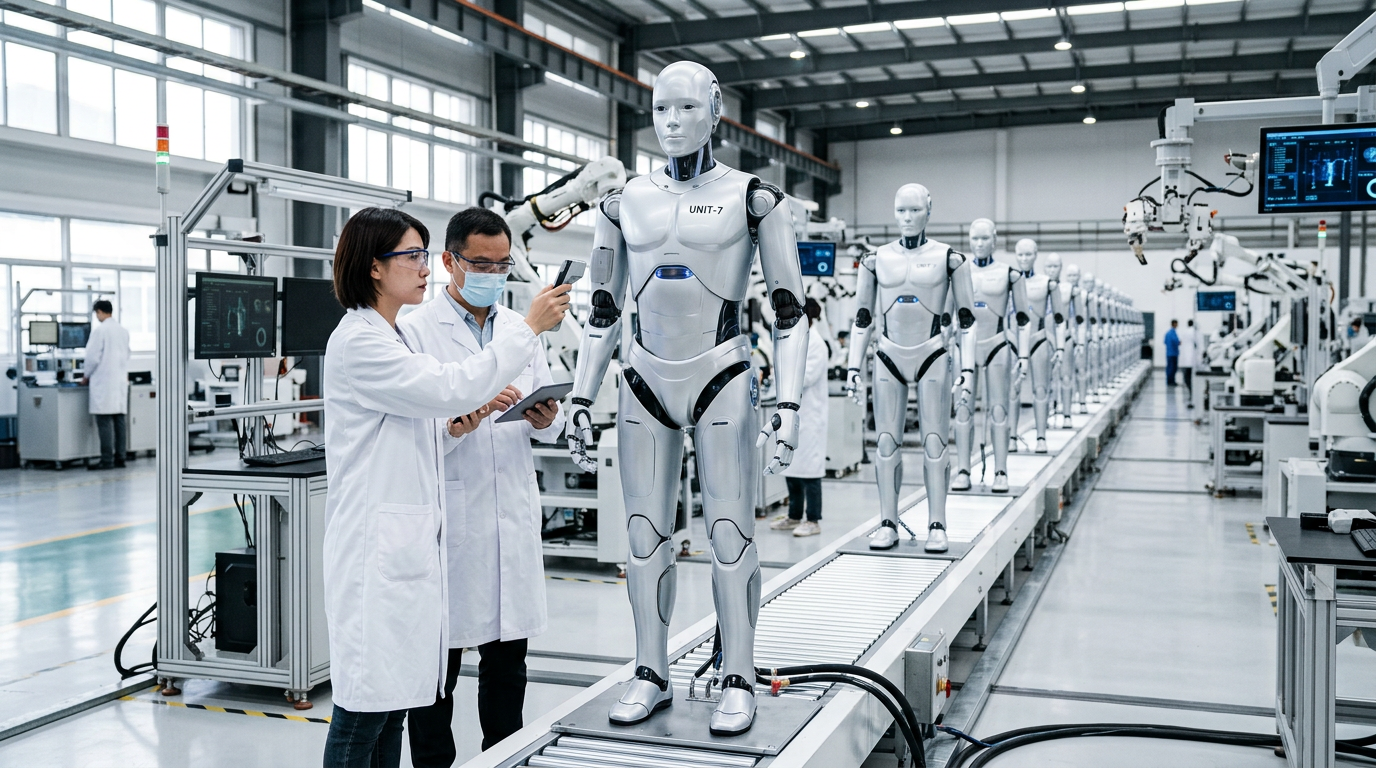
Exein, a Rome-based security company founded in 2018, has closed a $270 million round at a $1.7 billion valuation. Headline led the financing, with Sofina, Goldman Sachs, the European Investment Bank Group, KfW Capital and T.Capital joining. The money is meant to push the company's software deeper into machines that move: cars, factory equipment and robots.
Security that sits under the application
Exein's main product, Photon, hooks into the operating system kernel rather than the application layer. The company says its code now ships on more than 2 billion connected devices, with automotive, energy and robotics as the main sectors. It also reports roughly 5,000 fresh, non-repeating attack patterns each week, five times what it recorded a year earlier.
A valuation that moved fast
Nine months ago, in December 2025, Exein was worth $700 million. tech.eu puts the two-year climb at 30x and frames the company as Europe's most valuable cybersecurity scaleup. SiliconANGLE reports more than $600 million invested across all rounds. Annual recurring revenue in the first half of 2026 came in at 4x the year-earlier figure, with about 50 percent of revenue from Asia-Pacific.
The bet: AI that touches things
Founder and chief executive Gianni Cuozzo builds the pitch around AI leaving the cloud for machines that perceive, decide and act. His argument is that frontier models compress the patch window toward zero, so defense has to run at machine speed as well. Clarey Zhu, a partner at Headline, calls securing robots, vehicles and critical infrastructure a defining security problem of the coming decade.
Where the money goes
Exein plans a Bay Area office and further U.S. expansion; its Asia-Pacific headquarters is in Taiwan. Acquisitions in Europe and the United States are on the list. A revolving credit facility led by J.P. Morgan, with KfW as an additional lender, sits alongside the equity. On the product side, the company promises the underlying architecture by the end of 2026 and its first foundation models in the first quarter of 2027.
What the reporting does not settle
Device counts, revenue multiples and attack volumes come from Exein itself. Neither article points to an independent audit of those figures. The claim to be Europe's most valuable cybersecurity scaleup is not backed with a competitor-by-competitor comparison in either text. And neither piece establishes how much of the growth is driven by regulation rather than by buyers of industrial and robotic hardware.
FAQ
How much did Exein raise?
$270 million at a $1.7 billion valuation. Headline led the round, with Sofina, Goldman Sachs and KfW Capital among the participants.
What does Exein's Photon actually do?
Photon is security software that runs at the operating system kernel level inside machines. Exein says it ships on more than 2 billion connected devices in vehicles, energy equipment and robots.
Where is Exein based?
In Rome. Gianni Cuozzo founded the company in 2018; its Asia-Pacific headquarters is in Taiwan, and a Bay Area office is planned.