Generalist raises $200M at a reported $3B valuation
The extension lifts the 2024-founded startup's Series B to $600 million, just two months after a $2 billion valuation in June.
In short
Robotics startup Generalist AI has raised a roughly $200 million Series B extension led by 8VC at a $3 billion valuation, according to two reports the company has not publicly confirmed.
At a glance
- Extension: about $200 million led by 8VC, taking the Series B to $600 million in total.
- Reported valuation of $3 billion, up from $2 billion in June 2026.
- Founded in 2024 by Pete Florence and Andy Zeng (both ex-Google DeepMind) and Andrew Barry (ex-Boston Dynamics).
- Gen-1.5 learns tasks from video demonstrations 3 to 12 seconds long; training ran about eight months.
- Company-stated success rates: 59% from a single example, 83% with several examples.
Generalist AI has pulled in roughly $200 million at a $3 billion valuation, according to reports from TechCrunch and SiliconANGLE. 8VC is described as leading the extension. Added to the $400 million round from June 2026, that brings the Series B to $600 million. Both reports rest on unnamed sources, and the company has not confirmed the figures publicly.
From $2 billion to $3 billion in two months
The June 2026 round valued the company at $2 billion. Radical Ventures led that original Series B, with Nvidia, Bezos Expeditions and more than half a dozen other backers taking part, per SiliconANGLE. Union Square Ventures and AI researcher Fei-Fei Li are also among the early investors. Neither report says what the new money is earmarked for.
What Gen-1.5 is supposed to do
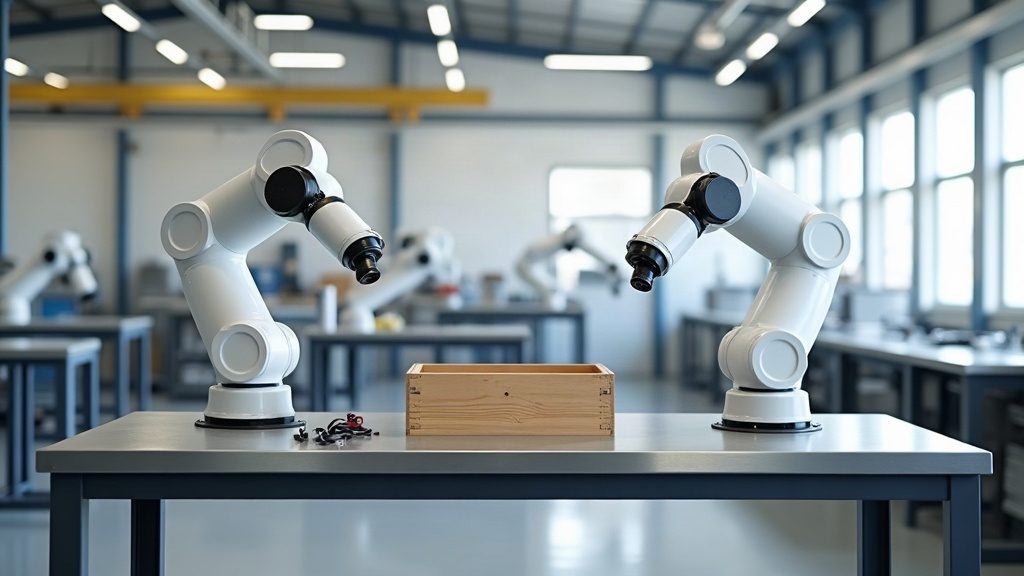
Pete Florence and Andy Zeng, both previously at Google DeepMind, founded the company in 2024 alongside Andrew Barry, formerly an engineer at Boston Dynamics. The product is not a robot but a foundation model meant to drive a range of robotic arms, with factory automation as the focus. Gen-1.5, the current version, is built to pick up new tasks from video demonstrations 3 to 12 seconds long, captured through built-in cameras or sensors worn on the hand. The company says the model trained over roughly eight months.
The pitch is that a task gets demonstrated rather than programmed. Generalist puts average task completion at 59% from one example and 83% when several examples are available. Those figures come from the company and have not been independently verified. SiliconANGLE also reports that the model refines workflows on its own and can reach for a different tool than the one it was shown.
An expensive corner of the market
The valuation places Generalist in the middle of a field that has absorbed a great deal of capital lately. TechCrunch cites Physical Intelligence at $11 billion and Skild AI at $14 billion, with Genesis AI reportedly targeting a $3 billion valuation of its own. Driving all of it is an expectation that robotics is due for the kind of breakthrough moment language models had. Evidence that these models are running broadly on real factory floors is still thin.
What the reporting does not settle
Three things stay open on the strength of these two sources. The round size and the valuation are both unconfirmed and attributed to unnamed people. The Gen-1.5 performance numbers are vendor-supplied with no outside check. And the link SiliconANGLE draws between Nvidia's investment and the use of Nvidia Jetson chips is that publication's reading, not a company statement.
FAQ
How much did Generalist AI raise?
Reports put it at roughly $200 million, an extension of the Series B led by 8VC. Together with the $400 million raised in June 2026, that totals $600 million. The company has not confirmed the figures publicly.
Who founded Generalist AI?
The company was founded in 2024 by Pete Florence and Andy Zeng, who both previously worked at Google DeepMind, together with Andrew Barry, formerly an engineer at Boston Dynamics.
What does the Gen-1.5 model do?
Gen-1.5 is a foundation model for robotic arms used in factory automation. It is designed to take on new tasks from short video demonstrations of 3 to 12 seconds rather than being reprogrammed for each individual motion.