Fake dating apps now run on AI personas
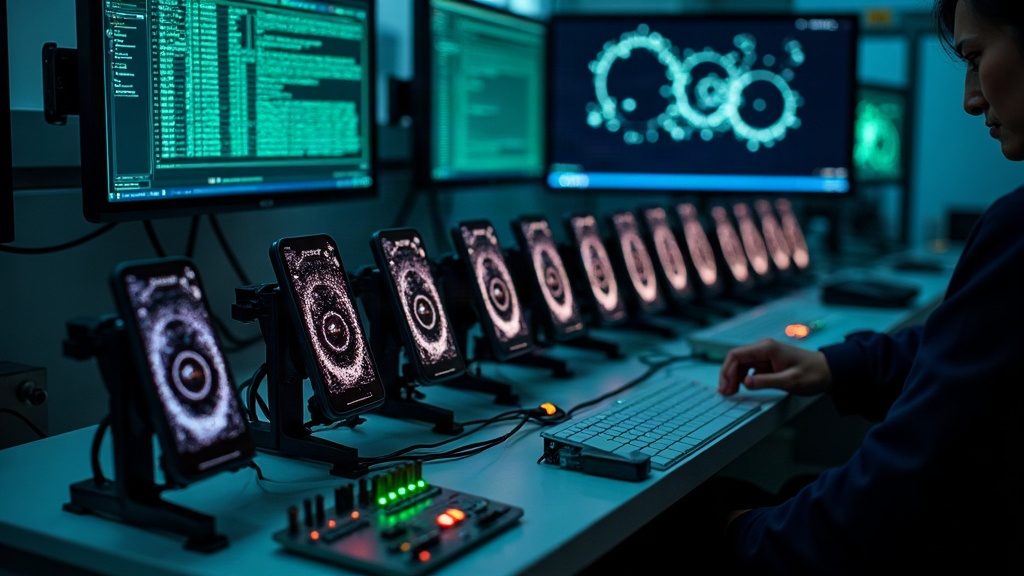
A security researcher was picking apart a fake app called Dora when a synthetic match placed an in-app call to his screen.

In short
Romance fraud has moved into purpose-built dating apps where the match, the conversation and even the incoming call are generated by AI.
At a glance
- Security researcher Matthew 'Zigula' Gore-Kormanik examined a fraudulent dating app named Dora.
- Mid-analysis, a pop-up announced an incoming call from a profile calling itself Jennifer.
- Jennifer's bio lists age 41, Sagittarius, red hair, blue eyes, piercings, music and horror movies.
- The Verge report is this article's only source; its full text was not reachable at writing time.
Romance fraud no longer needs a stolen photo and a patient con artist. It now ships as a purpose-built dating app in which the profile, the conversation and even the incoming call are machine-generated. Security researcher Matthew 'Zigula' Gore-Kormanik documented one of them.
The call that interrupted the analysis
Gore-Kormanik was taking apart a fraudulent dating app called Dora. While he worked on it, the running app threw a pop-up at him: an incoming call from a user named Jennifer.
Her profile was filled in with the kind of specificity that reads as human. It gives an age of 41, the star sign Sagittarius, red hair, blue eyes and piercings, with music and horror movies among her interests. None of it belongs to a person.
Why the pattern works
The old advice was to distrust anyone who shows too much interest too quickly. Generative models push the cost of that attention close to zero. An unprompted call minutes after install is therefore no longer evidence of effort; it is a product feature.
The delivery shape matters as much as the AI does. The fraud lives inside its own app rather than as a fake account on an established service, so no host platform is moderating it. That is our assessment, not a claim from the source.
What this article does not establish
The Verge piece could not be retrieved while this article was written; only the headline and the excerpt above are confirmed. That leaves open how Dora was distributed, whether Google's or Apple's stores carried it, how much money was lost, and which AI tooling was actually used. We are leaving those blanks visible instead of filling them in.
FAQ
What is the Dora dating app?
A fraudulent dating app that a security researcher analyzed. Instead of real members it runs on machine-generated profiles, such as the supposed user Jennifer.
How can you spot a fake dating app?
In the documented case an unprompted call pop-up arrived very early, from a profile that matched suspiciously well. One signal is not proof, and the source offers no checklist.
Was this app on Google Play or the App Store?
The available source material does not establish that. We have no verified information about how Dora reached users, so we make no claim here.